Seminars About Long-term Thinking


A Monthly Seminar Series, Hosted by Stewart Brand.   + About this Series  |  Subscribe to the Podcast


The Long Now Foundation's monthly Seminars were started in 02003 to build a compelling body of ideas about long-term thinking; to help nudge civilization toward our goal of making long-term thinking automatic and common instead of difficult and rare.

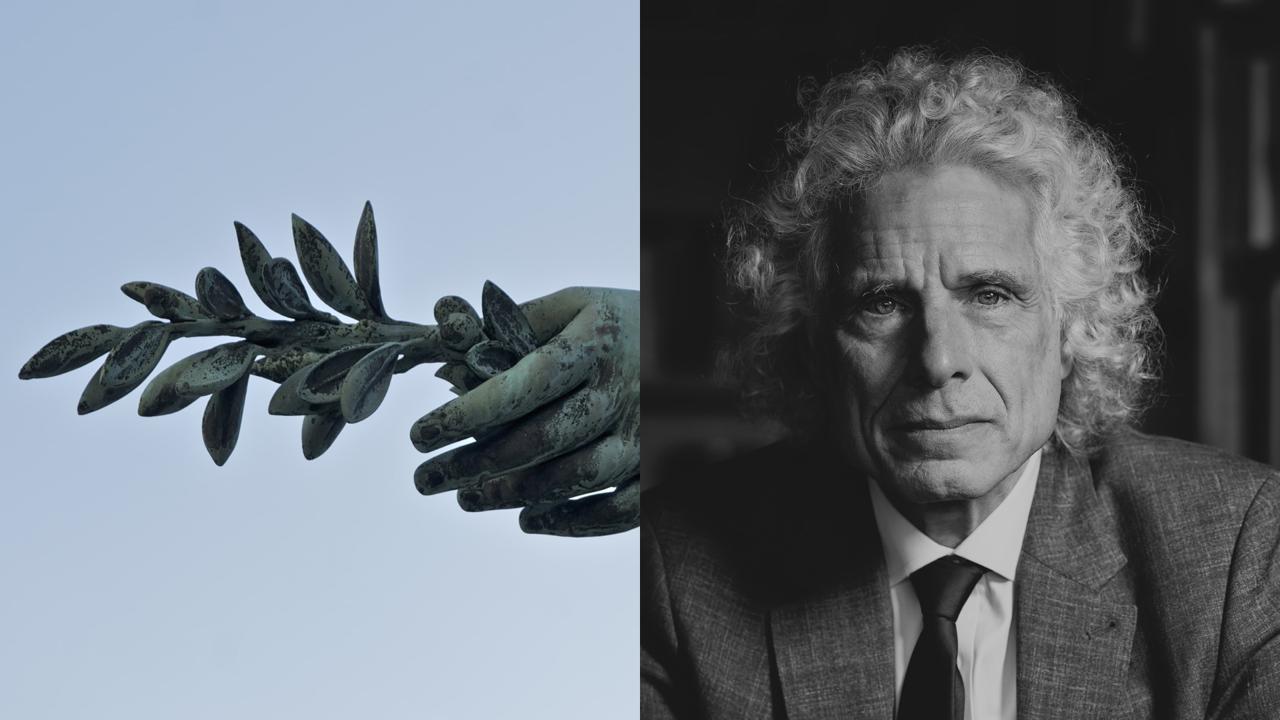
Steven Pinker

“The Decline of Violence”

+ Read Introduction

Steven Pinker changes the world twice in his new book, THE BETTER ANGELS OF OUR NATURE: Why Violence Has Declined.

First, he presents exhaustive evidence that the tragic view of history is wrong and always has been. A close examination of the data shows that in every millennium, century, and decade, humans have been drastically reducing violence, cruelty, and injustice---right down to the present year. A trend that consistent is not luck; it has to be structural.

So, second, he boldly founds a discipline that might as well be called “psychohistory.” As a Harvard psychologist and public intellectual (author of The Language Instinct and The Blank Slate), he sought causes for the phenomenon he’s reporting---why violence has declined. Real ethical progress, he found, came from a sequence of institutions, norms, cultural practices, and mental tricks employed by whole societies to change their collective mind and behavior in a peaceful direction.

Humanity’s great project of civilizing itself is far from complete, but Pinker’s survey of how far we’ve come builds confidence that the task will be completed, and he illuminates how to get there.

  • Share:

This talk was given at Herbst Theatre on Van Ness Ave. in San Francisco, California on Monday October 8, 02012

Video is available to Members. Membership starts at $8/month.

Steven Pinker

The Long Peace

“Nothing can be more gentle than man in his primitive state,” declared Rousseau in the 18th century. A century earlier, Thomas Hobbes wrote, “In the state of nature the life of man is solitary, poor, nasty, brutish, and short.” The evidence shows that Rousseau was wrong and Hobbes was right, said Pinker. Forensic archaeology (“CSI Paleolithic”) reveals that 15 percent of prehistoric skeletons show signs of violent trauma. Ethnographic vital statistics of surviving non-state societies and pockets of anarchy show, on average, 524 war deaths per 100,000 people per year.

Germany in the 20th century, wracked by two world wars, had 144 war deaths per 100,000 per year. Russia had 135. Japan had 27. The US in the 20th century had 5.7. In this 21st century the whole world has a war death rate of 0.3 per 100,000 people per year. In primitive societies 15 percent of people died violently; now 0.03 percent do. Violence is 1/500th of what it used to be.

The change came by stages, each with a different dynamic. Pinker identified: 1) The Pacification Process brought about by the rise and expansion of states, which monopolized violence to keep their citizens from killing each other. 2) The Humanizing Process. States consolidated, enforcing “the king’s justice.” With improving infrastructure, commerce grew, and the zero-sum game of plunder was replaced by the positive-sum game of trade. 3) The Humanitarian Revolution. Following ideas of The Enlightenment, the expansion of literacy, and growing cosmopolitanism, reason guided people to reject slavery, reduce capital crimes toward zero, and challenge superstitious demonizing of witches, Jews, etc. Voltaire wrote: “Those who can make you believe absurdities can make you commit atrocities.”

4) The Long Peace. Since 1945 there has been zero use of nuclear weapons, zero combat between the Cold War superpowers, just one war between great powers (US and China in Korea, ending 1953), zero wars in western Europe (there used to be two new wars a year there, for 600 years), and zero wars between developed countries or expansion of their borders by conquest. 5) The New Peace is the spreading of the Long Peace to the rest of the world, largely through the decline of ideology, and the spread of democracy, trade, and international organizations such as the UN. Colonial wars ended; civil wars did flare up. 6) The Rights Revolution, increasingly powerful worldwide, insists on protection from injustice for blacks, women, children, gays, and animals. Even domestic violence is down.

Such a powerful long-term trend is the result of human ingenuity bearing down on the problem of violence the same way it has on hunger and plague. Something psychologists call the “circle of empathy” has expanded steadily from family to village to clan to tribe to nation to other races to other species. In addition, “humanitarian reforms are often preceded by new technologies for spreading ideas.” It is sometimes fashionable to despise modernity. A more appropriate response is gratitude.

In the Q & A, one questioner noted that violence is clearly down, but fear of violence is still way up. Social psychologist Pinker observed that we base our fears irrationally on anecdotes instead of statistics---one terrorist attack here, one child abduction there. In a world of 7 billion what is the actual risk for any individual? It is approaching zero. That trend is so solid we can count on it and take it further still.

-- by Stewart Brand
MP3 Audio
MP4 Video (for Long Now Members)

This Seminar also appears on our Seminar Audio Podcast.
Subscribe to receive new Seminar downloads as soon as they are available.

Sign in or Become a Member to participate.

No comments yet. Be the first to leave a comment about this Seminar.

Also available through

with enhanced features

Upcoming Seminars

  • Monday July 29
  • Craig Childs
  • “Apocalyptic Planet: Field Guide to the Everending Earth”

Seminar Podcast

Audio podcasts are free and updated monthly.

Live Audio Streaming

Members from all over the world can join in on live events.

Seminar Email Updates

Subscribe to our Seminar mailing list for updates and summaries.

Event Calendar

Download and open with your iCal-compatible calendar app.


Previous Seminars

02013 Catalog

  • Ed Lu
  • “Anthropocene Astronomy: Thwarting Dangerous Asteroids Begins with Finding Them”
  • George Dyson
  • “No Time Is There--- The Digital Universe and Why Things Appear To Be Speeding Up”

02012 Catalog

  • Peter Warshall
  • “Enchanted by the Sun: The CoEvolution of Light, Life, and Color on Earth”
  • Cory Doctorow
  • “The Coming Century of War Against Your Computer”
  • Mark Lynas
  • “The Nine Planetary Boundaries: Finessing the Anthropocene”
  • Jim Richardson
  • “Heirlooms: Saving Humanity's 10,000-year Legacy of Food”

02011 Catalog

  • Geoffrey B. West
  • “Why Cities Keep on Growing, Corporations Always Die, and Life Gets Faster”

02010 Catalog

  • Ed Moses
  • “Clean Fusion Power This Decade”
  • David Eagleman
  • “Six Easy Steps to Avert the Collapse of Civilization”
  • Wade Davis
  • “The Wayfinders: Why Ancient Wisdom Matters in the Modern World”

02009 Catalog

  • Paul Romer
  • “A Theory of History, with an Application”
  • Daniel Everett
  • “Endangered languages, lost knowledge and the future”

02008 Catalog

  • Paul Ehrlich
  • “The Dominant Animal: Human Evolution and the Environment”
  • Craig Venter
  • “Joining 3.5 Billion Years of Microbial Invention”
  • Paul Saffo
  • “Embracing Uncertainty: the secret to effective forecasting”

02007 Catalog

  • Alex Wright
  • “Glut: Mastering Information Though the Ages”
  • Brian Fagan
  • “We Are Not the First to Suffer Through Climate Change”
  • Vernor Vinge
  • “What If the Singularity Does NOT Happen?”
  • Philip Tetlock
  • “Why Foxes Are Better Forecasters Than Hedgehogs”

02006 Catalog

  • Philip Rosedale
  • “'Second Life:' What Do We Learn If We Digitize EVERYTHING?”
  • Orville Schell
  • “China Thinks Long-term, But Can It Relearn to Act Long-term?”
  • John Rendon
  • “Long-term Policy to Make the War on Terror Short”
  • Jimmy Wales
  • “Vision: Wikipedia and the Future of Free Culture”
  • Kevin Kelly
  • “The Next 100 Years of Science: Long-term Trends in the Scientific Method.”

02005 Catalog

  • Sam Harris
  • “The View from the End of the World”
  • Clay Shirky
  • “Making Digital Durable: What Time Does to Categories”
  • Robert Fuller
  • “Patient Revolution: Human Rights Past and Future”
  • Roger Kennedy
  • “The Political History of North America from 25,000 BC to 12,000 AD”
  • James Carse
  • “Religious War In Light of the Infinite Game”

02004 Catalog

  • Jill Tarter
  • “The Search for Extra-terrestrial Intelligence: Necessarily a Long-term Strategy”
  • Daniel Janzen
  • “Third World Conservation: It's ALL Gardening”
  • George Dyson
  • “There's Plenty of Room at the Top: Long-term Thinking About Large-scale Computing”

02003 Catalog