Seminars About Long-term Thinking


A Monthly Seminar Series, Hosted by Stewart Brand.   + About this Series  |  Subscribe to the Podcast


The Long Now Foundation's monthly Seminars were started in 02003 to build a compelling body of ideas about long-term thinking; to help nudge civilization toward our goal of making long-term thinking automatic and common instead of difficult and rare.

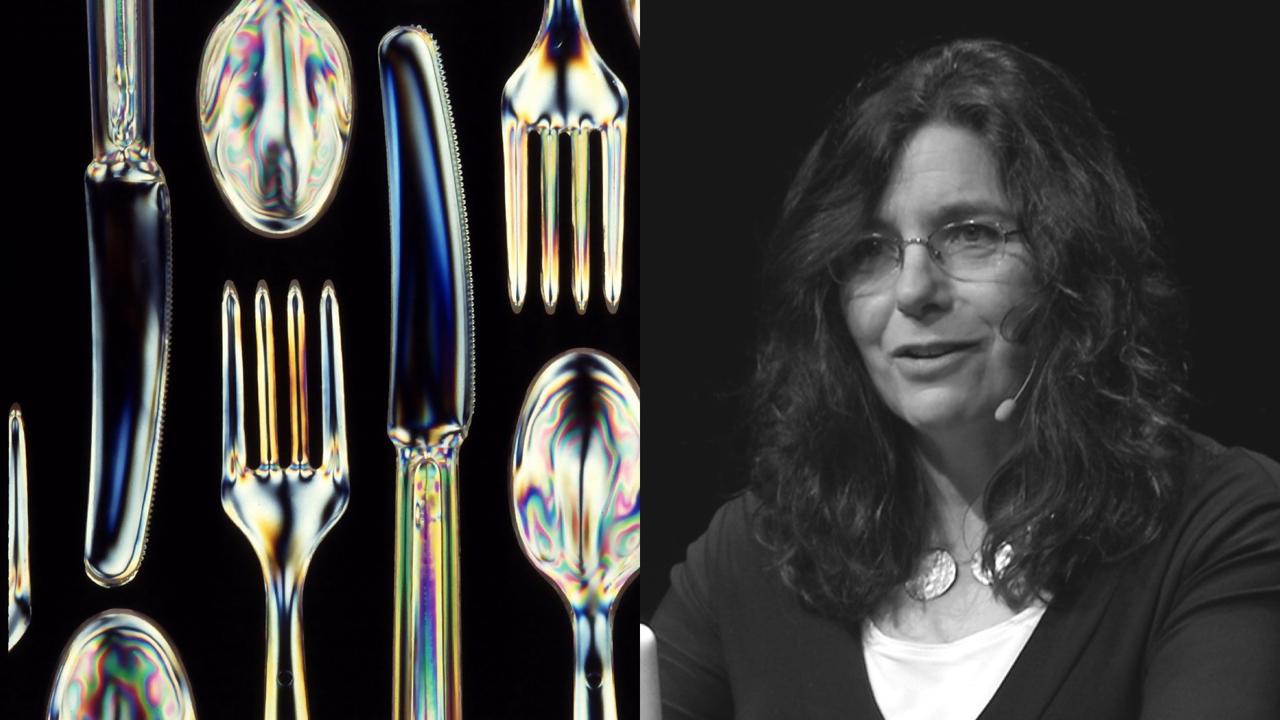
Susan Freinkel

“Eternal Plastic: A Toxic Love Story”

+ Read Introduction

Plastic now pervades civilization---how many of the things you see from where you are right now are plastic? It is an ingenious material whose miraculous qualities we take too much for granted, but it also sometimes has nightmarish downstream effects. The giant polymer molecules (polyethylene, polypropylene, polystyrene, etc.) that are so marvelously cheap to mold, extrude, shape, and weave are also extremely durable. Their cheapness makes them the basic material of a throw-away culture (one third of all plastic goes into disposable packaging.) Their durability means that any toxic effects persist indefinitely in the environment.

Plastic presents a problem in temporal management of the very long-term and the very short-term. How do we get the benefits of plastic's amazing durability while reducing the harm from its convenient disposability? The matter requires close and respectful coordination between short-term experts (businesses) and long-term experts (governments and nonprofits). Managing plastic well is a microcosm of managing civilization well.

Susan Freinkel is the author of Plastic: A Toxic Love Story and American Chestnut: The Life, Death, and Rebirth of a Perfect Tree.

  • Share:

This talk was given at Cowell Theatre in Fort Mason Center in San Francisco, California on Tuesday May 22, 02012

Video is available to Members. Membership starts at $8/month.

Susan Freinkel

Making plastic even better

Plastic is so new, Freinkel began, that among all the objects preserved in the sunken Titanic, none are synthetic plastic, because there was hardly any available in 1912. Natural plastic, however, was a familiar material. Amber was popular. Rubber was essential (all plant cellulose is made of long-chain polymers). Ivory for everything from billiard balls to piano keys was in such high demand that an 1867 paper warned about the looming extinction of elephants. The first synthetic plastic---celluoid---was developed as a substitute for ivory, and the elephants survived.

Bakelite was invented in 1907 to replace the beetle excretion called shellac ("It took 16,000 beetles six months to make a pound of shellac."), and was first used to insulate electrical wiring. Soon there were sturdy Bakelite radios, telephones, ashtrays, and a thousand other things. The technology democratized consumption, because mass production made former luxury items cheap and attractive. The 1920s and ‘30s were a golden age of plastic innovation, with companies like Dow Chemical, DuPont, and I. G. Farben creating hundreds of new varieties of plastic for thrilled consumers. Cellophane became a cult. Nylons became a cult. A plastics trade show in 1946 had 87,000 members of the public lining up to view the wonders. New fabrics came along---Orlon and Dacron---as colorful as the deluge of plastic toys---Barbie, the Frisbee, Hula hoops, and Silly Putty.

Looking for new markets, the marketers discovered disposability---disposable cups for drink vending machines, disposable diapers ("Said to be responsible for the baby boom"), Bic lighters, soda bottles, medical syringes, and the infinite market of packaging. Americans consume 300 pounds of plastic a year. The variety of plastics we use are a problem for recycling, because they have to be sorted by hand. They all biodegrade eventually, but at varying rates. New bio-based polymers like "corn plastic" and "plant bottles" have less of a carbon footprint, but they biodegrade poorly. Meanwhile, thanks to the efficiencies of fracking, the price of natural gas feedstock is plummeting, and so is the price of plastic manufacture.

Some plastics have some chemicals like bisphenol A and phthalates that are toxic. American manufacturers don’t have to list the materials in their products, and there’s no hope of testing every one of the 80,000 industrialized chemicals loose in the world. Freinkel recommends greatly expanding the practice of “green chemistry,” so that every process and product of manufacturing is safe and sustainable from the ground up. She would like to see a stronger regulatory environment and the building of a fully systemic recycling infrastructure.

In the Q & A Freinkel recommended a book by Elizabeth Grossman, Chasing Molecules: Poisonous Products, Human Health, and the Promise of Green Chemistry.

-- by Stewart Brand
MP3 Audio
MP4 Video (for Long Now Members)

This Seminar also appears on our Seminar Audio Podcast.
Subscribe to receive new Seminar downloads as soon as they are available.

Sign in or Become a Member to participate.

No comments yet. Be the first to leave a comment about this Seminar.

Also available through

with enhanced features

Upcoming Seminars

  • Tuesday June 18
  • Ed Lu
  • “Anthropocene Astronomy: Thwarting Dangerous Asteroids Begins with Finding the Damn Things”
  • Monday July 29
  • Craig Childs
  • “Apocalyptic Planet: Field Guide to the Everending Earth”

Seminar Podcast

Audio podcasts are free and updated monthly.

Live Audio Streaming

Members from all over the world can join in on live events.

Seminar Email Updates

Subscribe to our Seminar mailing list for updates and summaries.

Event Calendar

Download and open with your iCal-compatible calendar app.


Previous Seminars

02013 Catalog

  • George Dyson
  • “No Time Is There--- The Digital Universe and Why Things Appear To Be Speeding Up”

02012 Catalog

  • Peter Warshall
  • “Enchanted by the Sun: The CoEvolution of Light, Life, and Color on Earth”
  • Cory Doctorow
  • “The Coming Century of War Against Your Computer”
  • Mark Lynas
  • “The Nine Planetary Boundaries: Finessing the Anthropocene”
  • Jim Richardson
  • “Heirlooms: Saving Humanity's 10,000-year Legacy of Food”

02011 Catalog

  • Geoffrey B. West
  • “Why Cities Keep on Growing, Corporations Always Die, and Life Gets Faster”

02010 Catalog

  • Ed Moses
  • “Clean Fusion Power This Decade”
  • David Eagleman
  • “Six Easy Steps to Avert the Collapse of Civilization”
  • Wade Davis
  • “The Wayfinders: Why Ancient Wisdom Matters in the Modern World”

02009 Catalog

  • Paul Romer
  • “A Theory of History, with an Application”
  • Daniel Everett
  • “Endangered languages, lost knowledge and the future”

02008 Catalog

  • Paul Ehrlich
  • “The Dominant Animal: Human Evolution and the Environment”
  • Craig Venter
  • “Joining 3.5 Billion Years of Microbial Invention”
  • Paul Saffo
  • “Embracing Uncertainty: the secret to effective forecasting”

02007 Catalog

  • Alex Wright
  • “Glut: Mastering Information Though the Ages”
  • Brian Fagan
  • “We Are Not the First to Suffer Through Climate Change”
  • Vernor Vinge
  • “What If the Singularity Does NOT Happen?”
  • Philip Tetlock
  • “Why Foxes Are Better Forecasters Than Hedgehogs”

02006 Catalog

  • Philip Rosedale
  • “'Second Life:' What Do We Learn If We Digitize EVERYTHING?”
  • Orville Schell
  • “China Thinks Long-term, But Can It Relearn to Act Long-term?”
  • John Rendon
  • “Long-term Policy to Make the War on Terror Short”
  • Jimmy Wales
  • “Vision: Wikipedia and the Future of Free Culture”
  • Kevin Kelly
  • “The Next 100 Years of Science: Long-term Trends in the Scientific Method.”

02005 Catalog

  • Sam Harris
  • “The View from the End of the World”
  • Clay Shirky
  • “Making Digital Durable: What Time Does to Categories”
  • Robert Fuller
  • “Patient Revolution: Human Rights Past and Future”
  • Roger Kennedy
  • “The Political History of North America from 25,000 BC to 12,000 AD”
  • James Carse
  • “Religious War In Light of the Infinite Game”

02004 Catalog

  • Jill Tarter
  • “The Search for Extra-terrestrial Intelligence: Necessarily a Long-term Strategy”
  • Daniel Janzen
  • “Third World Conservation: It's ALL Gardening”
  • George Dyson
  • “There's Plenty of Room at the Top: Long-term Thinking About Large-scale Computing”

02003 Catalog