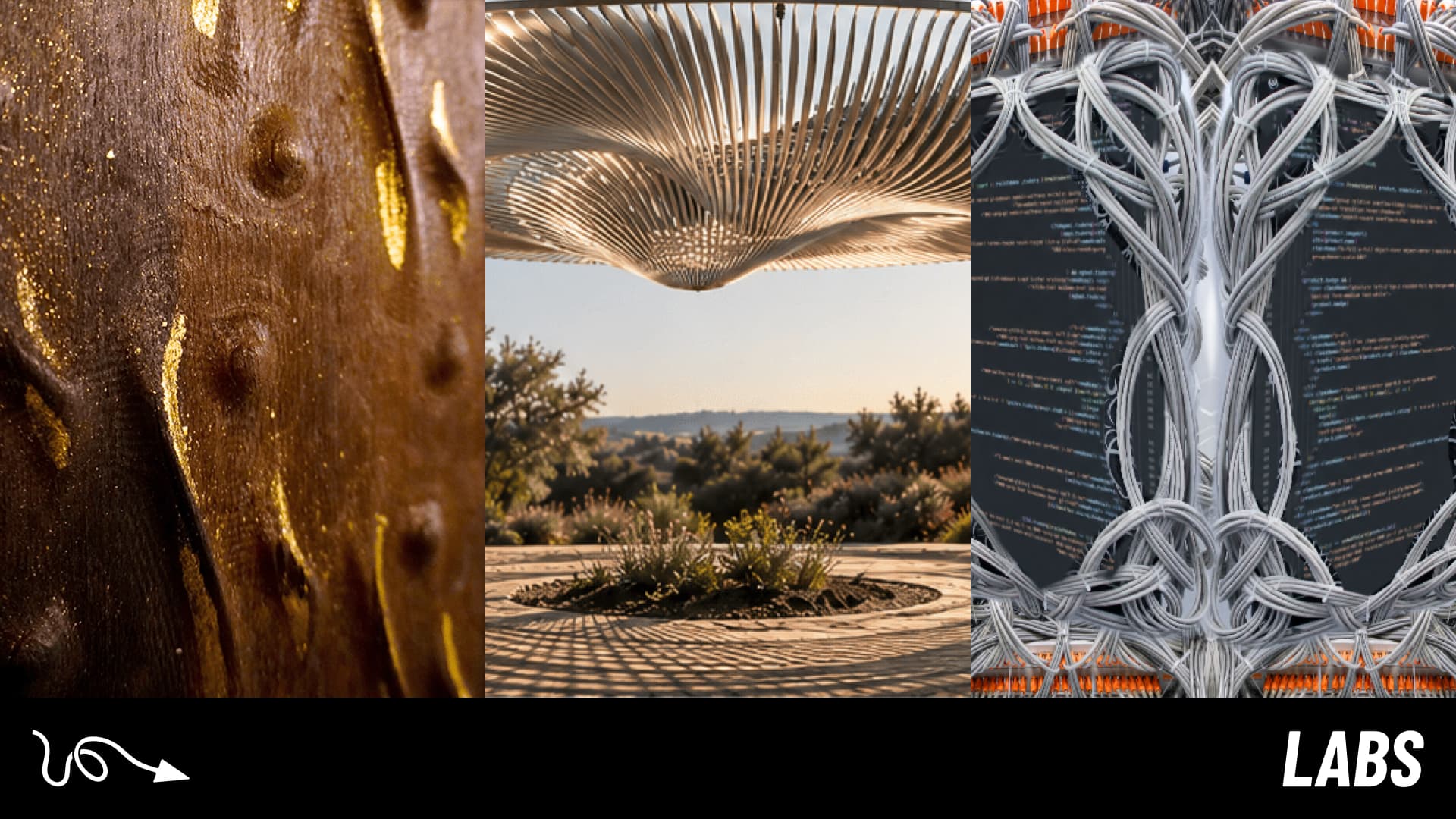
Long Now is excited to announce the awardees of Book of Time and Epistemic Cycles, the first two Labs of Protocols for the Long Now. Developed in partnership with the Protocol Institute, Protocols for the Long Now pairs our practice of long-term thinking with the Protocol Institute’s expertise in protocol design to investigate aspects of civilizational durability that are being radically reshaped by frontier technologies.
The awardees for Book of Time are Matthew Caren and Anastasha Rachel Gunawan (Lagu Hantu); Eirini Malliaraki (One Billion Clocks); and Sarah Friend (Thermodynamic Clock for LLMs). Nina Begus will serve as Lab Lead for Epistemic Cycles.

Book of Time
Book of Time invited concepts for new ways of marking, experiencing, or making sense of time. Over the coming year, the three awardees will develop their concepts into prototypes with $25,000 in funding and support from Long Now. The awardees will also appear alongside selected submissions in the Book of Time anthology, to be published in spring 02027.
“I’m excited about the composition of our Book of Time prototype awardees and anthology inclusions,” said Denise Hearn, Long Now’s Director of Strategic Initiatives. “Together, they offer a remarkable range of approaches to temporal scales, mediums, and orientations to deep time. Institutionally, we are committed to continually expanding and deepening our relationship with time and new temporalities, and our many applicants and awardees are helping us do this. Our three prototypes combine technology and software-focused projects with artistic, humanistic, and biospheric approaches to time. Long Now’s community and projects have always bridged technoscience, ecology, and the humanities, and these Labs prototypes carry that tradition forward.”
Lagu Hantu
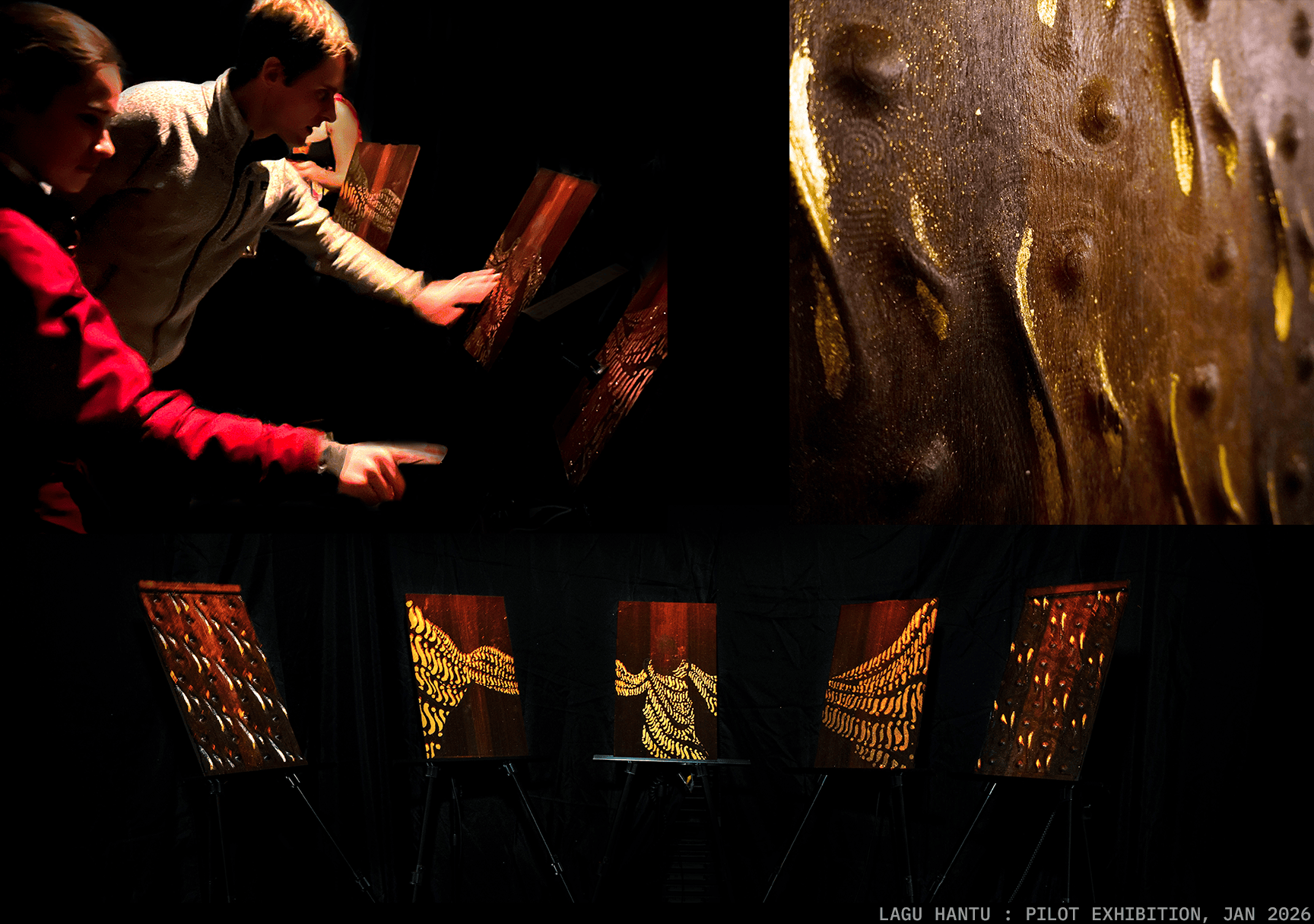
Matthew Caren, a researcher and musical instrument designer, and Anastasha Rachel Gunawan, a designer and technologist, will develop a handmade instrument installation that remembers everyone who has ever played it. Drawing on the Indonesian gamelan tradition, the instrument answers each player with recorded fragments of past performers who made similar gestures. Over the coming year, they will work toward a permanent home for a new instance of the instrument in the San Francisco Bay Area. Their project’s name, Lagu Hantu, is Bahasa Indonesia for ‘ghost song.’
One Billion Clocks
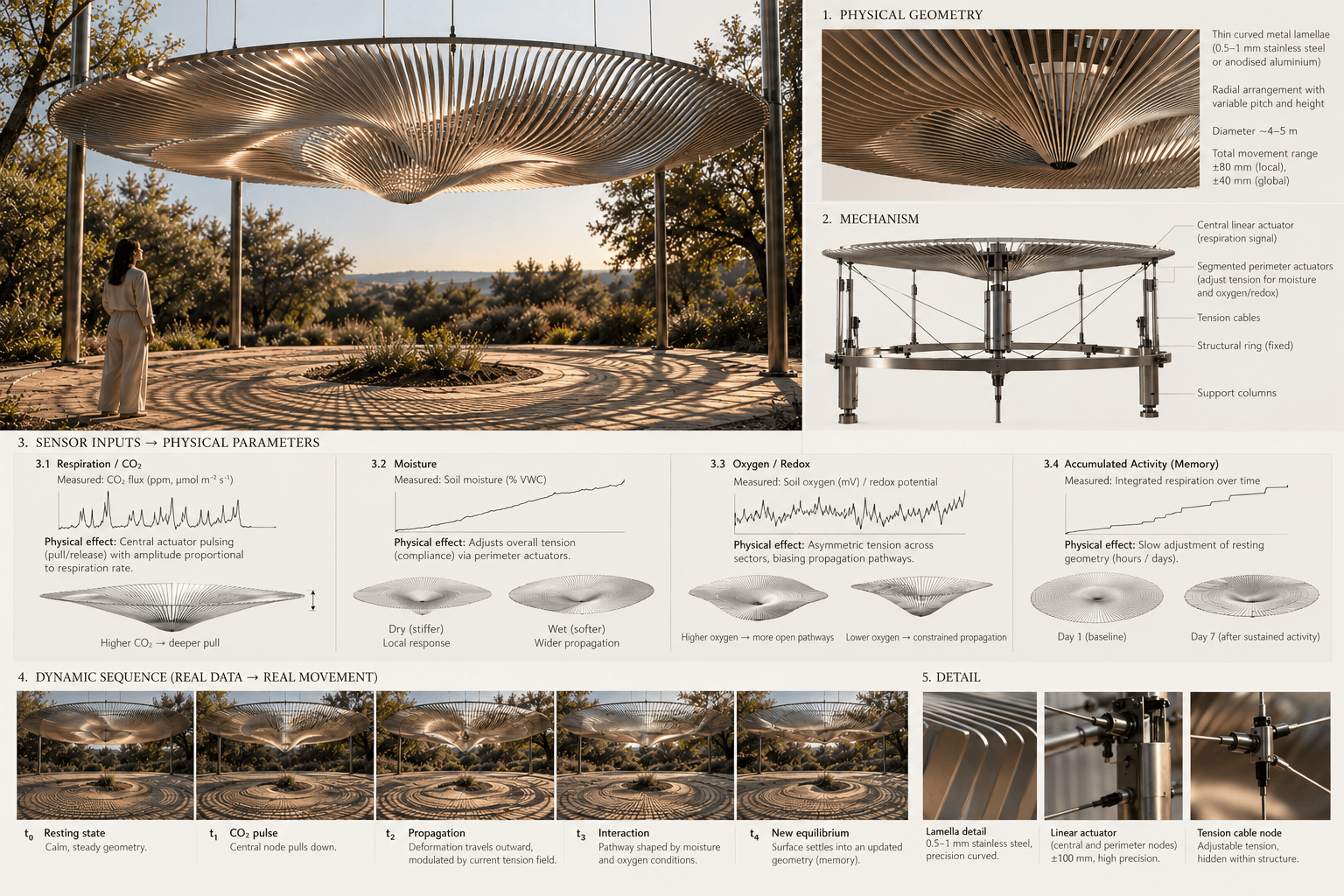
In One Billion Clocks, Eirini Malliaraki, a London-based design engineer and researcher, will develop a kinetic public sculpture that makes the metabolic time of living soil perceptible at human scale. The work begins from the idea that soil is not governed by a single rhythm, but by many nested processes unfolding across radically different durations, from respiration and microbial exchange to decomposition and structural change. Over the coming year, she will prototype how these coupled timescales can be embodied in a physical form that changes with the life of the ground beneath it.
Thermodynamic Clock for LLMs
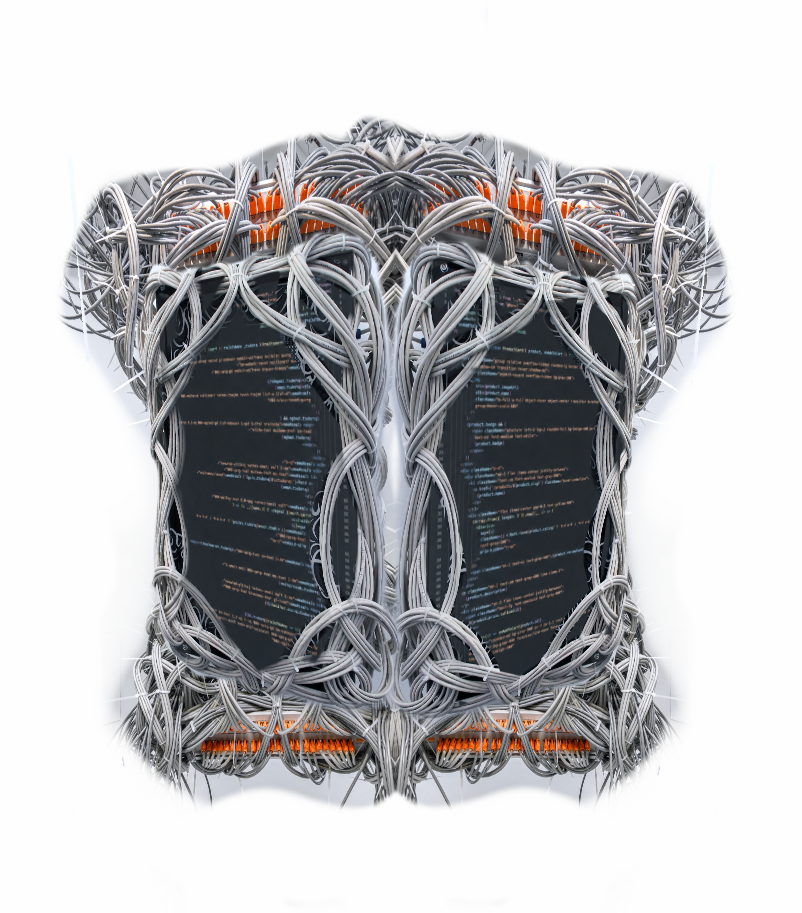
Sarah Friend, a Berlin-based conceptual artist and software engineer, will test how large language models behave when they can verify time independently. Friend proposes Bitcoin’s blockchain as a clock no single party controls: because each block takes real energy to produce, it serves as physical proof that a specific moment in a sequence has occurred. Will giving models access to different experiences of time alter their behavior? Sarah’s research and subsequent sculptural installation will explore this question and make those experiments visible to human audiences.
We are also excited to announce the 27 selected submissions that will be published in the Book of Time digital and print anthology, designed in partnership with Public/Official. The anthology will cover topics ranging from fugitive time, afterlife protocols, 1,000-year software, grief, comet time, hunger stones, and more:
- Monty Beardsell (9 years old)
- Will Binns
- Matthew Caren & Anastasha Rachel Gunawan*
- Emily DiCarlo
- M. Eilo
- Danielle Ezzo
- Chris Falliers
- Sarah Friend*
- Botao Hu and Iris Long
- Sean Jewell
- Tatiana Kacan
- Ryder Kimball
- Leo Jovial Koumjian (9 years old)
- Rayhan Prabu Kusumo
- Philip Linden & Ashley Kosak
- Jessica MacMillan
- Eirini Malliaraki*
- Michael Pawlyn
- Ida Persson
- Mateo Petel
- Dr. Andrea Rassell
- Emanuel Röhss
- Marissa Stoffer
- Juniper Stokes
- Matt Thompson
- Fang Ting
- Kalyani Tupkary
* = awardees

Epistemic Cycles sought an individual or team to investigate patterns of technological disruption that break down a society’s shared ability to discern truth, and propose repair protocols for navigating these disruptions more wisely today and in the future.
As Lab Lead, Nina Begus, a UC Berkeley scholar of the artificial humanities, will convene an interdisciplinary working group of scientists, artists, humanists, and technologists through 02027. The Lab will produce an Epistemic Cycles Atlas, a historical timeline and typology of information ruptures from writing and accounting to generative AI, and of how societies repaired them. Begus will also write an essay for Pace Layers and lead a public program at Long Now.
“Nina brings an incredible wealth of cross-disciplinary thinking and networks to bear on this timely (and also evergreen) question,” said Denise Hearn. “While we had many qualified applicants to lead this Lab, Nina’s unique combination of scholarly work on AI and the humanities, her consulting work with frontier AI labs, and her ability to translate complex topics to a wide-ranging audience felt very aligned with Long Now’s mission to inspire long-term thinking on today’s most pressing questions, at global scale.”
Our Selection Process
We launched Protocols for the Long Now with an open call in April 02026. By the June deadline, we had received 378 submissions across both Labs. For Book of Time, an interdisciplinary review panel of artists, philosophers, designers, and researchers read a longlist of submissions, then scored and discussed a shortlist of prototypes over two rounds. For Epistemic Cycles, we interviewed 10 finalists before selecting Begus as Lab Lead.
Timber Stinson-Schroff of the Protocol Institute and Long Now’s Denise Hearn will share how we designed the call and ran the review in a future post.
What’s Next
The series’ third Lab, Interspecies Protocols, will launch in 02027.
Thank you to everyone who applied. Thank you to our partners at the Protocol Institute, and to the Book of Time review panel: Eman Alkadi, Sachin Benny, Carissa Carter, Allison Johnson, Jonathon Keats, Kei Kreutler, Roman Krznaric, Katie Paterson, Venkatesh Rao, and Lisa Kay Solomon.