PREORDER & SUBSCRIBE >
I once had an editor who objected to a line in a novel of mine that described roadside sellers of grilled maize as “squatting.” “[I]f the corn is grilled near the ground,” they wrote, “perhaps it’s accurate” — even so, it might strike some readers as pejorative.
I try to make life easy for editors. But in this instance my response was a bit combative.
I’ve given this thought, and I’d like to keep “squatting.” In much of the world, squatting remains the modal posture of static wakefulness. When I was teaching in Shanghai, in 02018, one day I had my students working in small groups and I was circulating. At one point I squatted down next to one of the groups. One of my students expressed surprise that I could hold a squatted posture. She associated whiteness with an inability to squat. This was an educated urban twenty-year-old. Anyone who takes offense at the suggestion that people squat needs to ask themselves why they consider it derogatory.
Forms of the verb ‘squat,’ I see, appear 22 times in that 79,000-word text.
I am clumsy: I drop things, spill things, misjudge distances. Doorways knock glasses from my hand. My head attracts cabinet doors and the corners of exhaust hoods. I have sprained a toe climbing the stairs to the train (coming from acupuncture, no less, when you’d think I’d be … what is the phrase I’m looking for? More present). I have broken a toe colliding with a bench in the kitchen in the night, two nights before I had to travel; fortunately a fifth toe, I taped it to its neighbor and carried on. I have broken a metatarsal twice, the first time a blunt trauma fracture, falling on my outstep when I’d stood up quickly, not realizing my foot was asleep, the second a stress fracture, running uphill on a treadmill all winter. I have broken bowls rinsing them, not to say simply picking them up to eat from them.
In high-traffic spaces I have learned to remove myself from the flow of bodies, to find a wall or a pillar, not to stand there in the center like a brick — but I must remind myself every time.
In others’ homes and my own, I live in terror of dropping something and gouging the plank floors, or the sealed ceramic cooktop. Getting out of bathtubs demands care.
Perhaps none of this would seem remarkable if I did not share my life with a dancer.
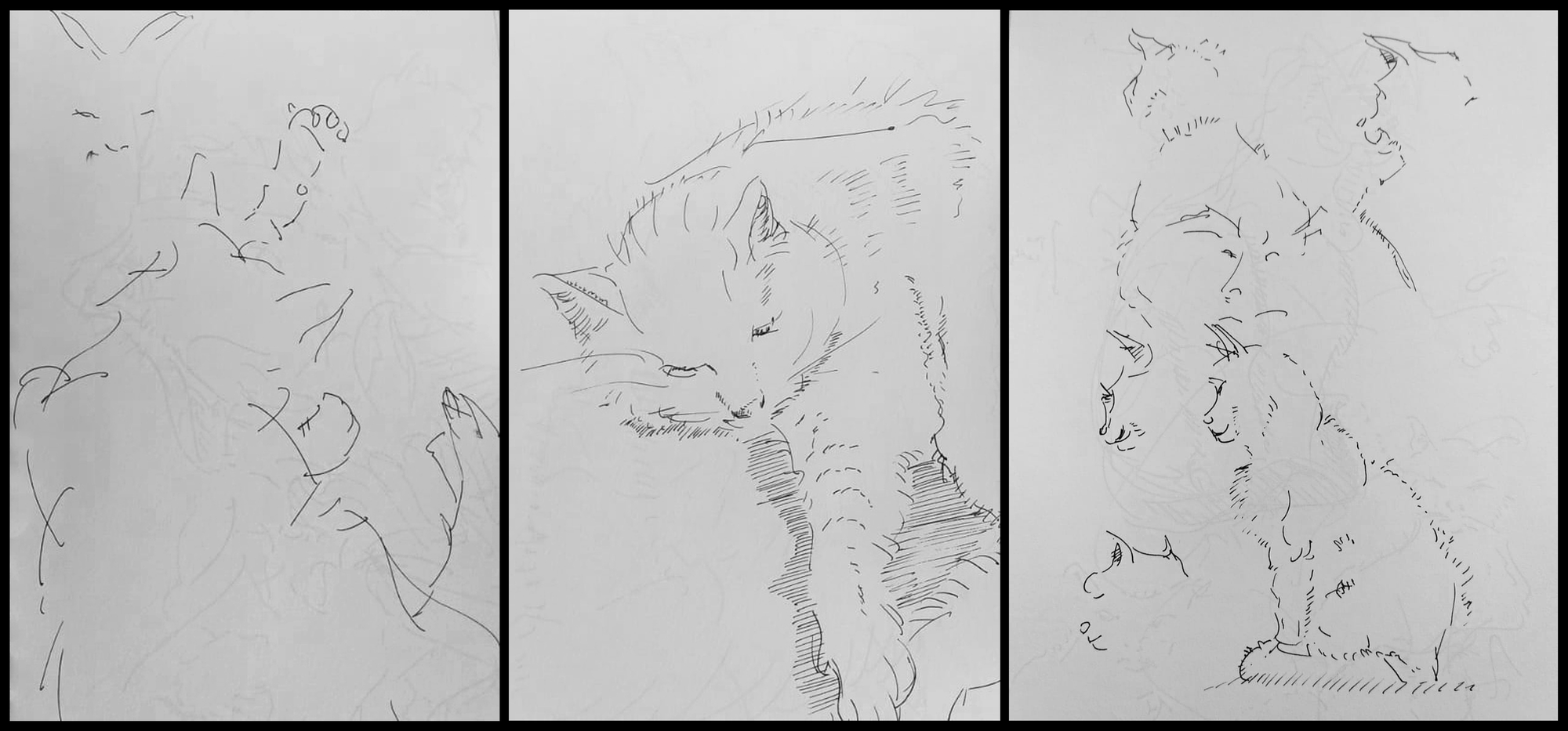
For animals, to live is to move. Even in sleep, the gut, the heart, and the diaphragm exhibit their characteristic rhythmic contractile activity; the animal form, the body, is given by the integration of metabolic and respiratory phenomena across the whole: in vertebrates, respiration in peripheral tissues, even those in contact with the air (mutatis mutandis, the water), depends on tonic rhythmic activity. This is one way in which the animal habit diverges from that of other living things. Animals, in virtue of the physiologically integrated character of the body, lack the resilience observed in fungi and plants. Animals are uniquely vulnerable to mechanical trauma, not to say extreme cold and cancer, for in animals the death (or rebellion) of peripheral tissue presents a systemic challenge. But the animal form affords one virtue: movement.
There is a special pleasure that attends the exercise of our locomotor faculties, a special terror in the prospect of their loss. The pleasure children take in trying things out with their bodies is no accident. Play affords young animals the chance to practice risky locomotor sequences of the sort not needed very often but essential in exceptional circumstances, to evade predators, say. The adult locomotor repertoire, the primatologist Michelle Bezanson observes, “is a subset of [the] juvenile”: young animals spend more time running and leaping, and, among tree-dwellers, on the ground. Play is a way of building a reservoir of skills for later, and not just in the motor domain, for it is through play that animals learn to cooperate and to assert themselves in dominance hierarchies.
It is through play that we learn to distinguish action arising from within the body from that imposed from without. Pause for a moment and turn your head. Note the constellation of sensations so evoked and how they bind together to evoke in turn the experience of turning the head. The experience of having one’s head manipulated by another differs from the experience of moving it oneself in this way: in the case of outside manipulation, the sensations evoked by the movement are not accompanied by a concomitant awareness of having caused the movement yourself. Often, when we move, the awareness that the movement originated from within us is accompanied in turn by a transient inhibition of sensitivity to the movement in question. It is not hard to see why: imagine if, every time you spoke, you were distracted by the thought that perhaps the speech was coming from somewhere outside you.
Tasting notes for teas:
Fresh, nougat, sweetcorn, edamame (a Fukuoka sencha)
Umami, creamy, marine (an Uji gyokuro)
White mushroom, moss, resin, lingering (a four-year Lincang sheng pu’er)
As with taste (see “On Meaning,” Pace Layers 02025), so much of the meaning of posture escapes us for want of an adequate descriptive lexicon. Rugged environments favor a different way of holding the spine to plains, cool climates favor different forms of domestic space to warm, and of course we learn a lot about how to hold our body by watching those around us. In these ways, until recently, our habits of posture formed a kind of rubbing of the places we grew up.
In “On Meaning” (Pace Layers 02025) I wrote:
Do I adjust my posture, perhaps unawares, to match the shapes of the trees I see around me? Certainly those whose habit evokes in me a body-like expressiveness, a limbedness …
‘Habit’ has a broad field of application. We can speak of the habit of making a cup of tea first thing on getting up or the arboreal habit of certain birds or the habit of a vascular plant — its structural characteristics and form, be it herbaceous or woody, arborescent (tree-like) or suffrutescent (scrubby). The first usage refers to behavior that is learned, the second to behavior that is innate or at least characteristic, the third to a constellation of morphological properties partly innate, partly developmental.
In plants and animals alike, the first habit is orientation to the vertical, to the Earth’s gravitational field, the second to light, prototypically though not necessarily that of the sun. Like plants, we are thigmotropic: we grow toward touch.
Again from “On Meaning”:
any thing we encounter that has for us the coherence and distinctness we associate with the term individual shapes us in an accretive way, inflects, as it were, our posturokinematic habit.
But I declined to specify ‘individual.’ This warrants a moment’s pause, for different kinds of things exhibit different kinds of individuality. And the discussion thus far presupposes a certain kind of individuality, that of animals.
In The Evolution of Individuality (01987), evolutionary biologist Leo Buss observes that our prototypes of biological individuals skew toward animals: the key participants in the formulation of modern evolutionary theory were all zoologists (and men; Buss himself studied the volvocine algae). With few exceptions, the defining feature of animal life cycles is the single-cell reproductive bottleneck. There is no vegetative option, for unlike in plants, where totipotency — a cell’s capacity to give rise to any kind of tissue in the organism’s repertoire — is widely distributed at the tips of stems and roots, animals propagate exclusively via specialized reproductive cells, the gametes. The reproductive bottleneck conditions the distinctive animal topology, the body, and, by extension, the forms of growth and senescence characteristic of animal life histories. There is no principled reason to treat the animal strategy as a standard of comparison; but of course this is what we do, implicitly, by treating bodiliness as a proxy for distinctness and coherence in living things.
In an essay of 01977 the ecologist Daniel Janzen described a population of genetically uniform dandelions as a single dispersed evolutionary individual. The dandelion, he writes, “is a very large tree with no investment in trunk, major branches, or perennial roots” — the individual dandelion stems are but ramets, contingently detached branches, of a single living thing.
“Such a generalization,” Janzen continues,
is often countered by the observation that the individual dandelions cannot contribute to each other’s welfare. … [But] group phenomena still occur, such as pollinator attraction, allelopathy [signaling of interspecifics], interspecific interference, etc., by the disconnected but closely spaced members of a conventional clone.
Imagine, Janzen proposes, that a mutant strain emerges with spines that repel the local goats. “As its crown grows from occupying one resource bit to covering most of the resource bits, it is competing with several other diffuse crowns of EI [evolutionary individual] dandelions, not with thousands of interbreeding individuals[.]” Of course we cannot exclude the possibility that the spininess trait will spread from one evolutionary individual to another by outcrossing. But by and large it is by outcompeting the other clones as a unit that the spiny clone — and thus the spininess trait — will flourish.
“[T]he ratio of reproductive to vegetative expenditure by the EI dandelion,” Janzen notes, is “among the lowest among plants.” Why, then, does every dandelion stem expend resources on a flower? This too, in Janzen’s view, is evidence that it is the genetically uniform population, the clone, on which selection acts. For to attract enough insect pollinators to sustain even the modest degree of outcrossing characteristic of its habit, the clone must “produce a flower crop large enough to attract insects that already have other large flower crops to visit.” That is, it is the evolutionary individual that pursues a reproductive strategy, not its constituent stems.
The title of Janzen’s 01977 paper is “What Are Dandelions and Aphids?,” though his treatment of aphids reads like an afterthought. “[A]phid eggs hatch in the spring,” Janzen writes, “into a relatively small number of EIs.” These “grow” by parthenogenesis, that is, asexual reproduction, each clone “spread[ing] itself very thinly over the surface of the plants in the habitat, so thinly that a potential predator is very unlikely to find all of it at once.”
If the application of Janzen’s view to insects feels less apt than its application to perennial flowering plants, you’re not alone. Our intuitions about what counts as an individual vary according to the kind of thing we have in mind. The individuality of an aloe, say, or of a colony of Golden Barrel cacti, is not the same as that of a vertebrate, which is not the same as that of a cephalopod. It is not just that these things exhibit different topologies but that they differ in their habits of responsiveness to the world.
‘Ramet’ is not a term Janzen uses, though today it would be conventional in discussions of the phenomenon he describes. Its counterpart is ‘genet’ — in Janzen’s usage the “EI dandelion” would be the genet, the individual dandelion stems the ramets of which that genet is composed. Today we’d call Janzen’s scenario — evolutionary selection acting on a population of genetically related living things as a unit — an instance of multilevel selection. Depending on what else we observed, we might go further and say it represented an early stage in an evolutionary transition in individuality: the emergence of a new kind of living thing, characterized by the metabolic, immunological, and reproductive cohesion we typically ascribe to individuals, incorporating its constituents not as members but as parts. The emergence of chromosomes via the selective coupling of genes represents one such transition, as do the emergences of the eukaryotic cell and multicellular organisms. This last transition has unfolded a number of times over the course of the history of life on Earth.
What would it be like to be more like a tree, or a forest? To be smeared across the earth like nattō on toast? Perhaps it would be like nothing. Rather: Perhaps it would lack the quality of being like something.
But to say that some phenomenon lacks the quality of being like something is not to say that it lacks a capacity to characterize the world. Certainly a forest exhibits this quality. For it can only flourish in media of suitable friability, water potential, phosphorus concentration, etc. This differential flourishing will be reflected in the shape the forest takes: the forest may be said to characterize the world in a way not unlike I do when I adjust my posture to match that of a tree. Via differential growth and reproduction, the forest is mapping the world into itself. And in this way it exhibits a directedness, an intentionality, a capacity for discrimination.
But living things do not simply conform to the world, they fashion the world to be more conducive to their flourishing, in the case of forests remodeling soil structure, sub- and surface water potential, etc. So we might say: it is not simply that living things characterize the world, but that the world comes to characterize them. It is this bidirectional induced correspondence that marks out the distinction between world and self.
You might say: “Surely there’s a difference between a forest growing along a phosphorus cline and when I, walking down the street, find myself entering a market, drawn by the odors of food.”
The difference is one of the time horizon over which the event unfolds and the topology (ensemble-like versus bodily) of the thing expressing directedness. And there’s a difference in how that capacity is expressed: via propagation or via taxis, directed motor activity. No doubt these differences bear on whether the thing in question exhibits phenomenality — whether it experiences the world, whether it has an abiding awareness of a self. But let us consider the possibility that the ethical significance of a thing, the claims it makes on us, need not depend on its exhibiting the qualities of self-awareness we associate with animals.
Part of what I’m groping for is a phenomenology of huts, or workbenches, or the circle of tarmac where you squat, repacking a knapsack: our first experience of shapeshifting is that of learning to manage situations where everything is within reach, you have simply to stretch and twist, deforming your body to meet the space, learning, at length, to experience space as an everted continuation of the self. In habitual settings (kitchen counter, desk, car) you come to know where something is by how it feels to retrieve it.
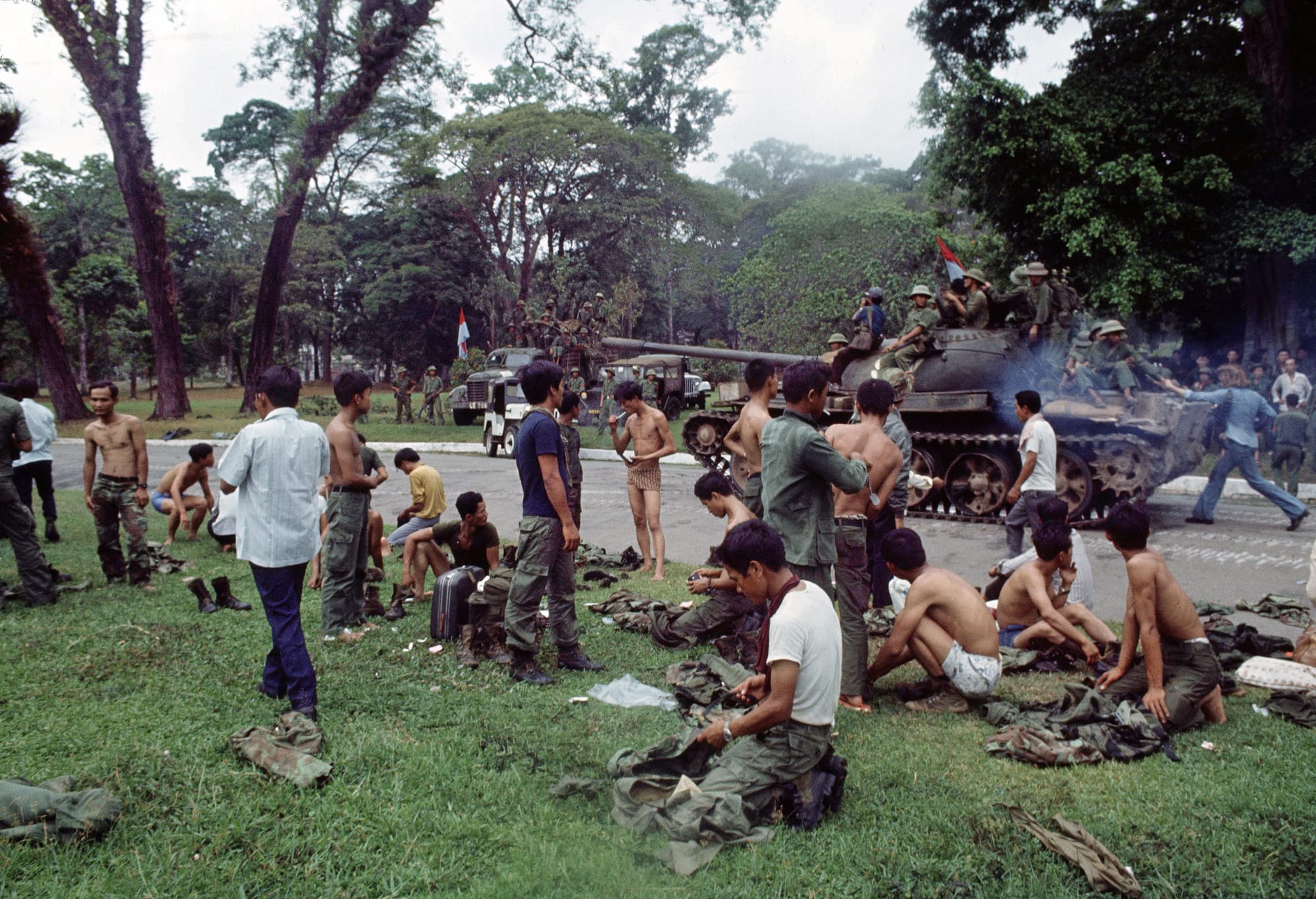
One place to begin, if you wished to formulate a phenomenology of huts, would be film. Consider the films of Tsai Ming-liang, particularly his late work. Filmed from a single camera setup in four extended takes, Afternoon (02015) features Tsai and his longtime collaborator Lee Kang-sheng sitting in salvaged lounge chairs in a corner of their home, an abandoned apartment block in the mountains outside Taipei. The floor is covered in sand and plaster; trees grow in through the unglazed windows. The film’s visual interest derives from changes in the light as the afternoon unfolds and from how the two men hold and shift their bodies, responding to one another in the way of those who have spent decades together: crossing their legs at the knee, flexing their toes, now resting an arm on the back of the chair, now slouching a bit, allowing the chairs to do the work of managing gravity for them.
In Days (02020), for the first time in Tsai’s œuvre, we see Lee Kang-sheng static: sitting, soaking in the bath, face down on a massage chair. When he walks, you see the effort of it, trunk tilted forward, gait plodding. His counterpart Anong Houngheuangsy, by contrast, spends much of the film squatting; when he walks he seems all but unaware of his body.
The anthropologist Terence Turner was a student of the Kayapo, a people of eastern Amazonia. He spent many years recording Kayapo myths, among them that of the jaguar’s fire.
In the myth, the jaguar rescues a boy who has been left stranded on a cliffside by his sister’s husband. (This in itself signals that the story begins in a time or space that is in some sense prior to the social: among the Kayapo it is considered improper for a woman’s brothers and partner to socialize.) Sent up a ladder to retrieve fledgling macaws from a nest on the cliff face, the boy instead tosses down a stone, which breaks his sister’s husband’s hand. In a rage, the latter pulls down the ladder and departs. Passing by some days later, the jaguar finds the youth, starved, coaxes him down, and takes him home, instructing his wife to care for the boy in his absence. But when the male jaguar has gone out hunting again, the female jaguar menaces the boy, and when this has happened twice the boy is instructed by his adoptive father that should it happen a third time he must shoot his — the jaguar’s — wife in the breast and return to his own people. In this way does the boy, now a young man, return to his village, bearing useful arts: domestic fire, cooked food, the use of bow and arrow, and the cotton string that the female jaguar spins while her partner is away in the forest.
Among the features of the Kayapo worldview on display in the myth is an opposition of two ways of spatializing time, of refiguring processes (things that unfold in time) as configurations (things that unfold in space). These Turner refers to as the vertical and the concentric. “[P]lants,” Turner observes,
grow upward, inert matter and meteorological phenomena flow or fall downward, the sun rises and sets. … Only human beings and animals have the capacity for horizontal locomotion, which is associated with purposive (social) movement or transitions between spatial points or zones of contrasting qualities. [Turner 02017, 39]
Within the vertical mode of time we observe a contrast of aspect between downward and upward processes. The former have a perfected quality to them: once rain hits the ground, the process has come to an end. Upward processes, by contrast, carry an inceptive aspect, a possibility of continuing activity. These, of course, are the processes we associate with the development of plants and animals: becoming vertical, learning to manage gravity.
For the Kayapo the contrasting dimension, what Turner calls the concentric, is that of the processes that lead individuals and groups out into the metasocial world of the forest and back to the social world of the village: processes that, as the story of the jaguar’s fire suggests, play an essential role in socialization, in reproducing the social order in one’s person and becoming a vehicle of that order.
“The jaguar,” Turner writes,
fetched [the ladder] and leaned it up against the tree again. “Climb down, I’ll take you home and find you something to eat!” he cried. The boy climbed part way down, but, overcome by his terror of the jaguar, he went back up the ladder to the nest … The jaguar reassured the boy, “My son, I like you! Don’t be afraid! Climb down! Climb down, and I will give you food so you can grow up big and strong and be my hunting companion.” The boy, reassured, mastered his fear and climbed down and sat on the jaguar’s neck. [Turner 02017, 12]
It is in recognizing our kinship with other animals, and, in particular, our need to eat, that we become human.
Of course there is something uniquely intimate, among the postures, about squatting. In squatting, we bring the body into contact with itself, compressing the gut in ways that make us distinctly aware of its contents and tone. Perhaps this is how the attribution of a habitual squatting posture could be viewed, from a certain perspective, as disparaging. It is not simply defecation that squatting evokes, but the continuing process by which the earth is incorporated into the body and, at length, the body resorbed into the earth. Squatting evokes the rhythmic pulses of the inner self and so draws our attention to the animal fact of the self. In a deep squat, you are apt to sense the tattoo of the heart in the left knee, the tidal expansion of the thoracic cage against the thighs, the contraction of the gut against the abdominal wall.
My own acquaintance with squatting is bound up with the fact that I am, as it were, a poor eater. My gut is apt to rebel at the slightest provocation. Its discontent can last days or weeks and takes a range of forms, often in series: spastic pain like a ball lodged beneath the diaphragm, exquisite sensitivity to distensional pressure, ambient soreness, phantom sensations of obstruction, impaired motility. The pain is of an intimacy that verges on the sexual. I have learned to avoid fermentable sugars of the sort apt to promote osmotic potential in the lower gut (thus: no teas with notes of moss, resin, lingering). And I have come to associate sitting with the reduced autonomic tone apt to cause my gut to shut down. Sitting is a posture of repose, squatting of readiness, and it is this readiness, this dynamism, that affords relief. With the pelvis elevated, as in meditation (facilitating spinal extension, not to say gravitational traction on the viscera), sitting is comfortable. But recumbent postures, as in air travel, fill me with foreboding.
The light at dawn during those Pacific tests was something to see.
Something to behold.
Something that could almost make you think you saw God, he said.
These are the opening lines of Joan Didion’s novel Democracy (01984). The speaker is Jack Lovett, Inez Victor’s love interest and the book’s pivot.
None of the observers would fly down until the technical guys had the shot set up … Sometimes we’d get down there and the weather could go off and we’d wait days, just sit around cracking coconuts, there was one particular event at Johnston [Atoll] where it took three weeks to satisfy the weather people.
… Meanwhile we lived in the water.
Caught lobsters and boiled them on the beach.
Played gin and slapped mosquitoes.
Jack Lovett is a soldier and a sensualist, a man who lives for sun and water and the scent of soft earth after rain, a man who lives in his body; and yet he spends a considerable part of his time static, recumbent, restrained. In this he is an exemplary man of his time.
The opening scene of Democracy is presented in monologue. I picture archival footage, the Pacific Proving Grounds, 01952, Jack Lovett’s voice in voiceover. Later we get the establishing shot: it is April 01975; Inez Victor and Jack Lovett are lying in bed in a borrowed apartment in Hong Kong where Lovett has asked Inez to wait. “[H]e had spent [the preceding] months,” the narratorial Didion tells us, “shuttling between Saigon and Hong Kong and Honolulu.”
There had been innumerable details, loose ends, arrangements to be made. There had been exit paperwork to be fixed. There had been cash to be transferred. There had been end-user certificates to be altered for certain arms shipments, entry visas to be bought … and houses to be located for displaced Vietnamese officers[.]
There was also the matter of Inez’s daughter Jessie, who had, a few weeks prior, walked out of heroin rehab in Seattle, got a taxi to Boeing Field, and talked her way on to a C-5A transport “that landed seventeen-and-one-half hours later (refuelling twice in flight) at Tan Son Nhut, Saigon” (Didion 01994, 159, 177).
What you could do was, you could talk. You got to hear everybody’s personal life story down there, believe me, you’re sitting on an island a mile and a half long and most of that is the landing strip.
Those technical guys, some of them had been down there three months.
Got pretty raunchy, believe me.
Then the weather people would give the go and bingo, no more stories. Everybody would climb on a transport around three A.M. and go out a few miles and watch for first light.
Watch for pink sky.
And then the shot, naturally. [Didion 01994, 11–3]
What strikes me is the tension in Jack Lovett’s narrative between the sensuality of the scene on Johnston Atoll (“Meanwhile we lived in the water. Caught lobsters and boiled them on the beach”) and the disembodiment of the critical moment (“Watch for pink sky. And then the shot, naturally”). The paradox of Jack Lovett’s body is the paradox of our own: unprecedented mobility coupled with an unprecedented suppression of the urge to move. Nowhere is this clearer than in Didion’s descriptions of air travel.
“Some men (fewer women),” she observes,
are solitary, unattached to any particular place or institution, most comfortable not exactly alone but in the presence of strangers. They are comfortable for example on airplanes. … A flight of fewer than eight hours is a hop, a trip these men barely recognize. On the ground they seem easy only in hotel lobbies and transit lounges, … sealed environments in which they always remember the names of the attendants who make the drinks and arrange the connecting flights. [Didion 01994, 34–5]
The “sealed environments” of Democracy mark a turn in the history of human posture. When recumbency reenters the adult postural repertoire, not as a respite from movement but as a baseline, something enters our habit of thought in parallel: a tendency to lose track of the body, to forget our debt to gravity. And when we forget our debt to gravity we forget our kinship with other living things.
—
JOSH BERSON writes fiction and essays and occasionally makes procedural noise as Additive Set (additiveset.bandcamp.com). His work includes The Human Scaffold and The Meat Question. The still point at the center of his thinking is the relationship between skill and value: how our habits, inter alia, of listening, breathing, sitting, and eating, inform what matters.
References
Bezanson, Michelle (02017) Primate Positional Behavior: Development and Evolution. Annual Review of Anthropology 46: 279–298.
Buss, Leo W. (01987) The Evolution of Individuality. Princeton: Princeton University Press.
Byrne, Richard W. (02015) The What as Well as the Why of Animal Fun. Current Biology 25(1): R2–R4.
Calcott, Brett, and Kim Sterelny, eds. (02011) The Major Transitions in Evolution Revisited. Cambridge, Mass.: MIT Press.
Didion, Joan (01994 [01984]) Democracy. London: Vintage.
Janzen, Daniel H. (01977) What Are Dandelions and Aphids? American Naturalist 111/979: 586–589.
Tsai Ming-liang, dir. (02015) Afternoon【那日下午】. Home Green/Grasshopper, 137min.
Tsai Ming-liang, dir. (02020) Days【日子】. Home Green/Grasshopper, 127min.
Turner, Terence S. (02017) The Fire of the Jaguar. Chicago: Hau Books.
Tuthill, John C., and Eiman Azim (02018) Proprioception. Current Biology 28(5): R194–R203.