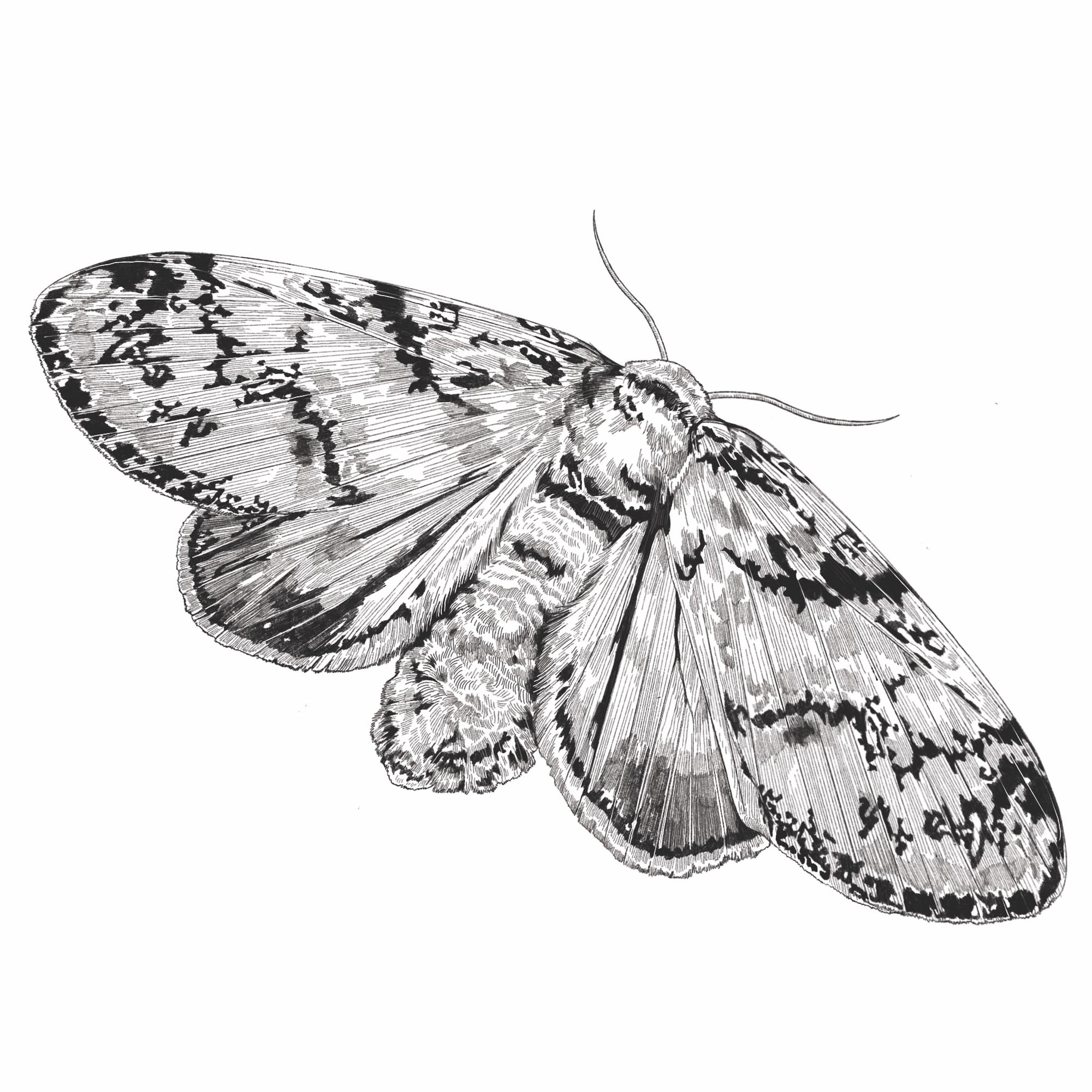
Keats' book explores the practical and philosophical dimensions of self-organization in nature as inspiration for future human governance. Each section focuses on a biome; each chapter, a species. In the essay that follows, Keats asks: "What if a constitution were to undergo stages of metamorphosis akin to an insect, as a young nation develops?"
While not written with the pace layers framework in mind, the essay speaks directly to one of its core claims: that healthy civilizations are ones whose layers — Fashion, Commerce, Infrastructure, Governance, Culture, and Nature — are each allowed to operate at their own pace, making the whole system robust and adaptable. But constitutions, the primary instruments of Governance, have a calibration problem: too robust, and they calcify; too adaptable, and they collapse. "There appears to be...no fine-tuning of flexibility and specificity to solve the problem," Keats writes. Unless we reimagine what constitutions can be, he argues, all forms of democratic governance will eventually fail.
A Governance layer problem finds its answer in Nature, the slowest layer of all — and in particular, the arctic woolly bear moth, an exemplar of an evolutionary strategy that has endured for at least 320 million years.
The founding bargain of the United States presaged a premature death for the embryonic nation. In order for the former British colonies to survive, they needed to form a confederation capable of repelling foreign powers such as England. In order to confederate, the newly-constituted states had to recognize each other’s claims to sovereignty, which meant that the agreement that bound them was necessarily contingent on unanimity. Ratified in 01781 following nearly four years of squabbling, the Articles of Confederation put the states in “perpetual union”, with a congress designated to represent them in foreign relations. Consistent with the 13 members’ sovereign status, any amendment also had to be endorsed by every one of them.
Almost immediately, the Articles proved dysfunctional, undermined by the fiercely independent spirit of ‘76. To raise a military, Congress was required to requisition soldiers from the states instead of drafting them directly; prioritizing the defense of their own territories, states routinely sent fewer than requested. Taxation was equally vexing, since Congress wasn’t authorized to tax people directly, and states frequently sent less money than the government needed to honor foreign debts. With credit and credibility imperiled, and national security perpetually in jeopardy, some members of the Confederation started to reevaluate perpetuity, recognizing that the commitment was meaningless if it led to extinction.
“There are great seasons when persons with limited powers are justified in exceeding them,” declared Virginia governor Edmund Randolph on June 16, 01787. Randolph was in Philadelphia, where delegates of every state except Rhode Island had convened to discuss revisions to the Articles of Confederation. The convention was authorized by Congress, which requested a report to guide future amendments, but many conventioneers rapidly concluded that the Articles were beyond redemption, and that Congress was without recourse given Rhode Island’s refusal even to engage in conversation. Randolph and his fellow Virginians, most notably James Madison, argued that the Union needed to be reconstituted with a new Constitution.
The Virginia Plan provided a template for a strong federal government, the three branches of which would hold sovereign power sufficient to contend with threats foreign and domestic. But the scheme could succeed only by breaching the Articles that were the Confederation’s sole means of collective action. Ignoring the requirement of unity, the conventioneers transformed the Virginia Plan into a compact requiring just nine states’ consent. With ratification of this Constitution, the Articles of Confederation effectively became obsolete. Isolated and vulnerable, the remaining states had little choice but to accept the Articles’ replacement.
The founding irony of the United States Constitution is that it came into being by way of a constitutional crisis. Surveying threats to the Constitution in the University of Pennsylvania Law Review, the legal scholars Sanford Levinson and Jack Balkin define constitutional crises as cases in which “political leaders publicly claim the right to suspend features of the Constitution in order to preserve the overall social order and to meet the exigencies of the moment”. They cite what happened in Philadelphia in 01787 as paradigmatic and possibly unique in U.S. history. (Although there are many instances where political actors have claimed powers beyond any reasonable legal justification, they have twisted constitutional language to condone their actions instead of declaring that the Constitution doesn’t apply to them.)
Arguably more common in the centuries since ratification — and certainly more commonly claimed — are a second type of constitutional crisis, which Levin and Balkin define as occurring “when all relevant actors comply with their widely accepted constitutional duties and roles, but following the accepted understandings of the Constitution fails to resolve an existing political crisis or leads to disaster”. Many recent and current complaints about the political status quo could plausibly be put in this category. Most prevalent are the problems caused when political minorities have disproportionate influence, which are often attributed to Senate apportionment or the electoral college, as well as lifetime appointment of federal judges. All of these mechanisms by which minorities get what they want are written into the Constitution. Some are vestiges of 18th century compromises between states of different sizes. Others reflect the Framers’ concerns about populism. The increasingly violent reactions of citizens to contemporary political crises brings each dispute to the brink of constitutional calamity. Even more threatening is the crisis of legitimacy that emerges from the combination of constitutional constraints on majoritarianism: a loss of faith in the United States. Eight out of ten Americans across the political spectrum consider democracy to be at risk. The threat of a type-two constitutional crisis is what led to the type-one crisis in Philadelphia. In the present circumstances, it could happen again.
Adding to the irony that the Constitution came into being by way of a crisis is the irony that frustration with this compact echoes the frustrations of the Virginia delegation regarding the one that preceded it. Amendment is considerably easier than changes to the Articles of Confederation, but still so unwieldy that only 27 amendments have passed since 01789, considerably less than 1% of the number advanced. In the interest of crisis management, numerous pundits on the left and right have called for a second Constitutional Convention. A top priority of any rewrite would be to amend the amendment process.
Given the sources of discontent, and the degree, the political ambitions of 21st century conventioneers are less likely to coincide with those of 01787 than the sentiments of another convening, circa 00411 BCE. The setting was Athens, in the Attica Basin, site of the ancient world’s most radical democracy. An assembly comprising all male citizens commanded near absolute power. Every decision was made by simple majority with one crucial exception: Any member of the Assembly could raise a graphē paranomōn, a charge that proposed legislation was contrary to legal custom.
Nearly 200 years old, this tradition effectively gave expression to an unwritten constitution. Encapsulating basic rules of conduct and moral principles attributed to the lawgiver Solon, the nomoi put limits on populist whim. When a graphē paranomōn was raised, voting would cease and the legislation would be subjected to a public trial. A sworn jury of citizens would hear the case and rule on the prospective law’s legitimacy. In 00411 BCE, a faction of oligarchs sought to control the Assembly, but were blocked by a graphē paranomōn. In a righteous fit of democratic pique, the Assembly then voted to eliminate the graphē paranomōn so that neither the oligarchs nor any other faction could challenge the majority.
As Duke University political scientist John David Lewis has documented, the triumph of the Assembly coincided with the rise of sophism as the predominant political philosophy in Attica. This turn to rhetoric, unchecked by ethics and the wisdom of history, transformed the Assembly into a “composite tyranny” (as Aristotle would later call it), resulting in a series of rash decisions that (as Lewis contends) allowed Sparta to vanquish Athens in the Peloponnesian War. In an irony as rich as any in Philadelphia, the want of a constitution effectively resulted in a type-two constitutional crisis: a political situation in which the system was self-defeating.
Between the Athenian Assembly and the Congress of the Confederation, there’s a broad gamut of models of governance ranging from heedless freedom to smothering constraint. In formal terms, constitutional scholars view this gamut in terms of entrenchment. Constitutions entrench political systems, constraining future decisions on the basis of enduring commitments to fundamental principles that all laws must follow as well as underlying mechanisms of legislation and enforcement. Written constitutions tend to be more restrictive than verbal agreements, but the level of entrenchment varies considerably even amongst constitutions on parchment.
In the centuries since the U.S. Constitution was ratified, the first of its kind, democratic constitutions have become more flexible on average. As the legal scholars Mila Versteeg and Emily Zackin have documented in The American Political Science Review, modern constitutions are typically amended twice per decade. This plasticity has coincided with an increase in specificity, providing much more detail than the Framers offered in 01789. Constitutions today tend to be four times the length of the document drafted in Philadelphia. According to Versteeg and Zackin, increases in flexibility and specificity are related, and the impetus for both is democratic. The increase in specificity is a response to the overreach of courts that have exploited vagueness for political gain. The increase in flexibility is a reaction to the political influence of past generations, which rule from beyond the grave. Both reactions to entrenchment nudge constitutional law closer to ordinary legal code. They sacrifice constitutional protections of longstanding norms, prioritizing the alignment of constitutions with the proximate needs of the polities they regulate. They recognize that misalignment tends to grow over time as a consequence of all kinds of societal change, and constitutions have the potential to hold people back.
The Framers were not oblivious to this predicament. On the contrary, it was vigorously debated in the 01780s. Set in opposition to James Madison’s worries about composite tyranny were the concerns of another Virginian. Thomas Jefferson argued that citizens needed to be deeply engaged in every aspect of governance for democracy to meaningfully endure. Having seen the injurious consequences of the Articles of Confederation, he advocated that the Constitution be rewritten by each generation (which he calculated to be a period of 19 years). Needless to say, Madison prevailed. (He might have benefited from the fact that Jefferson was in Paris during the Constitutional Convention, serving as minister to France.)
Would Jefferson’s plan have fared better, preventing the constitutional crises haunting the 21st century? Or would it have led to political tragedy, as happened in ancient Athens? Although Versteeg and Zackin show that constitutions are becoming increasingly Jeffersonian, there’s scant evidence that democracy is stronger or more stable. By their reckoning, only 50% of national constitutions last longer than 19 years; Jefferson’s dream endures as a recurring national nightmare.
The truth is that governments fail because constitutions are too strong and because they’re too weak. Both chronic misalignment and composite tyranny are lethal. There appears to be no optimal level of entrenchment, no fine-tuning of flexibility and specificity to solve the problem of democratic governance. Looking at history, I am led to believe that real improvement in constitutionality will require mechanisms other than entrenchment and amendment.
Jefferson continued to contemplate these matters through his presidency and was still concerned about democratic longevity in 01816 when he wrote a letter to the lawyer Samuel Kercheval with a curious analogy. He compared the expectation that a constitution would persist in the form it was written to the requirement that a man “wear still the coat which fitted him when a boy.” Jefferson’s analogy does not really fit the image of a new constitutional fashion for every generation, or a patchwork fix by amendment. Instead it suggests to me that a constitution must grow with a nation — and that the growth naturally happens in stages.
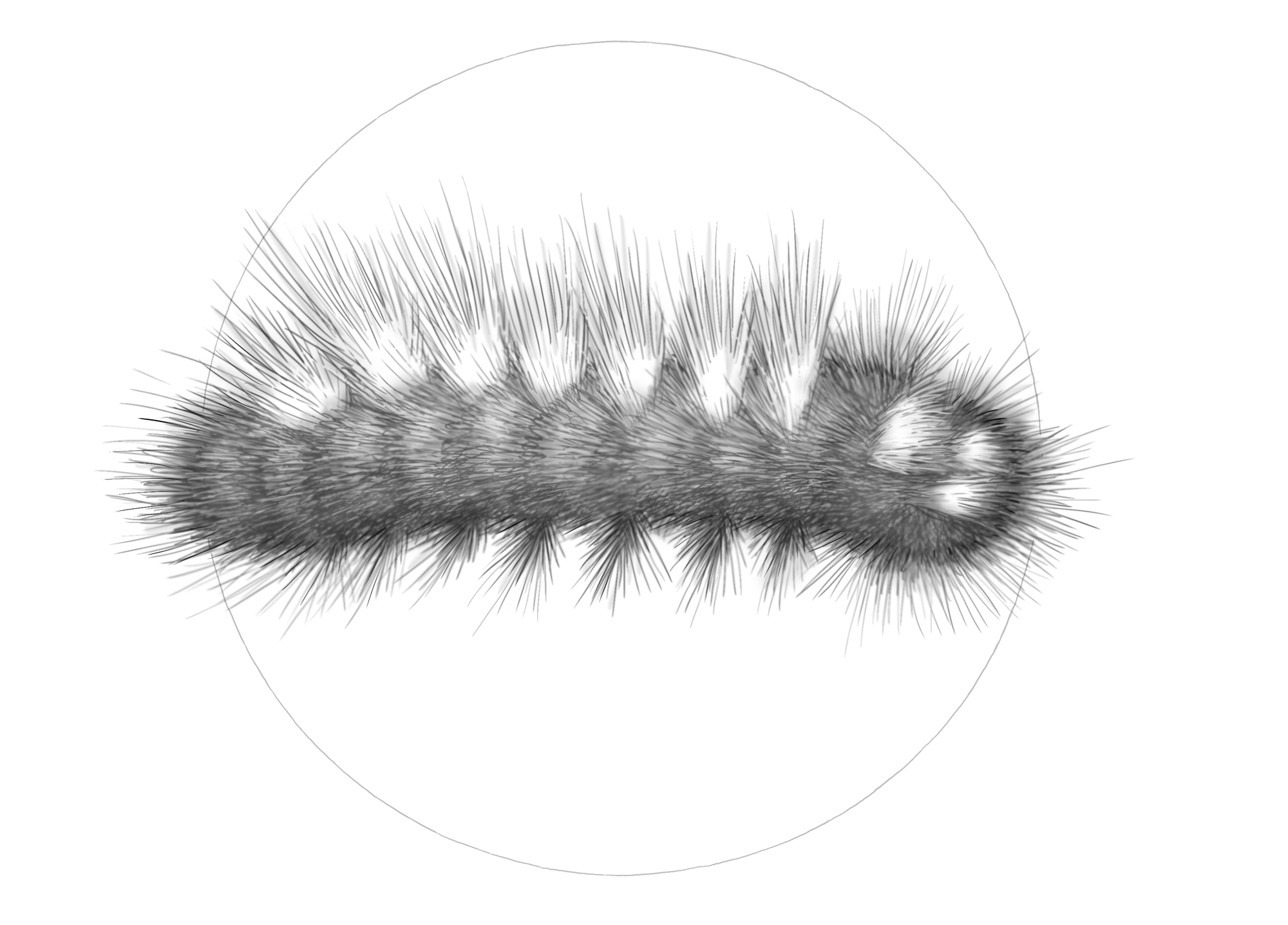
Long before coats cloaked boys and men, insects mastered a problem more challenging than tailoring: growing up within an exoskeleton. All insects grow cuticle for support and protection. The enclosure scaffolds muscle and prevents dehydration. But an adult is many times the size of her eggs. After hatching, insects must feed voraciously to reach maturity, exceeding the size of their cuticle repeatedly. Insects achieve this feat by molting. Each stage of development — technically known as an instar — involves the delicate process of shedding old cuticle and growing a new exoskeleton.
Because the process is cyclical, insects must take care to time molting to coincide not only with the extent of personal growth but also with seasonal cycles. This is especially the case in environments with seasonal extremes. No place in the Northern Hemisphere is more severe than the High Arctic Archipelago, where woolly bear caterpillars endure winter temperatures as low as -94 degrees Fahrenheit. In contrast to the dark deep freeze of January and February, the relentless sunlight of July and August raises temperatures to as high as 60.
Both extremes present difficulties for the insects. In the winter, metabolism would be physiologically impossible even if there were food to eat. In the summer, the woolly bear caterpillars are parasitized by wasps and flies. The parasitoids are deadly. As a result, the life of an Arctic woolly bear caterpillar (Gynaephora groenlandica) is highly punctuated. The insects are active for just several weeks each June. During that time, they gnaw the leaves of willow trees, basking in the sun between feedings to maximize digestion. If they manage to consume enough willow in a season, they molt. Otherwise they don’t. Either way they must hide and enter diapause — a kind of suspended animation that can withstand freezing — by the beginning of August, before wasps and flies grow active.
In optimal conditions, the lifecycle of a woolly bear is seven years, though the insect can survive as long as 14 if food is scarce. Molting is timed meticulously given that a molt must be completed and diapause begun before the parasitoids become active. But the dual regulation of molting based on time of year and size reached brings tractability to the regularity of development. The stages of woolly bear life are simultaneously systematic and contingent, biologically entrenched without the peril of environmental misalignment.
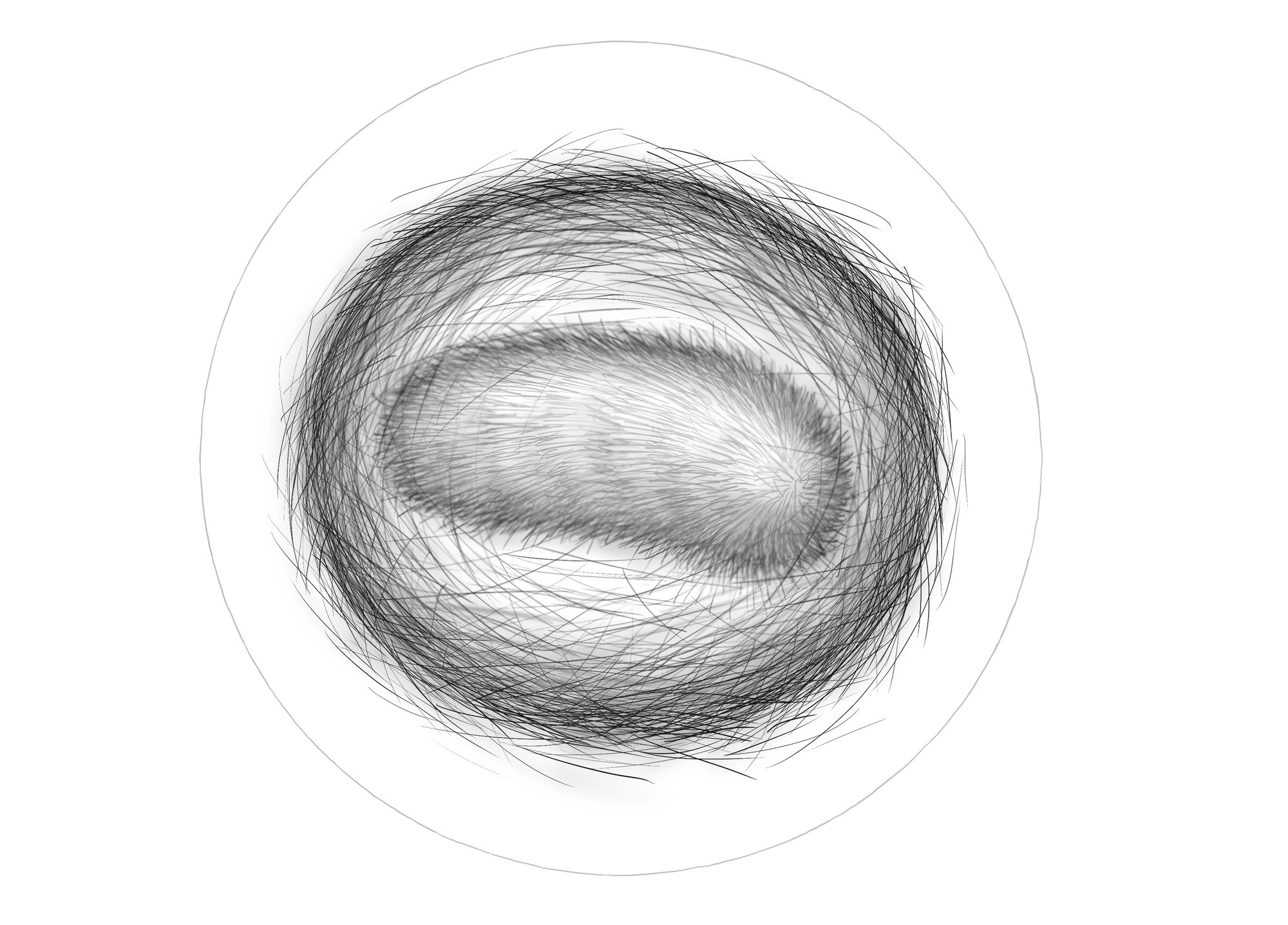
The instars of the woolly bear caterpillar vary in scale, but structural change appears to be minimal. To the casual observer, there is scant indication that the final instar will pupate and that a winged moth will emerge and mate. This metamorphosis is one of the most dramatic processes in nature, providing a way for insects to fulfill entirely different roles at different stages of their lives, supremely adapted to each, seemingly unconstrained by their past. The woolly bear is reconstituted in the pupa — and the timing of reconstitution is as elastic as the timing of any molt — yet this reconstitution follows a higher order that regularizes change. In the critical leadup to the final stage of life, when so much is happening at once, a tradeoff between entrenchment and flexibility is minimized by entrenching flex.
Metamorphosis is not only a topic of study for entomologists. The phenomenon has attracted interest in organizational circles for nearly a century. In the 01960s and ‘70s, the sociologist William Starbuck wrote a series of papers in which he attempted to historicize “organizational metamorphosis” and characterize the phenomenon mathematically as a schema for business. Starbuck deemed the “most famous metamorphosis model of recent times” to be Karl Marx’s historical materialism, which Starbuck glossed as the “decomposition of human history into successive stages of primitive socialism, ancient slave society, feudalism, bourgeois capitalism, and communist socialism”. In this model, as Starbuck presented it, metamorphosis is prompted by technological developments such as farming and banking, which topple the ruling class when new technologies become irreconcilably inconsistent with older social structures. Metamorphosis is inevitable in these circumstances, according to the Marxist worldview glossed by Starbuck, but as a disruptive force overtaking civilization, not as a self-actuated transformation.
What Starbuck and his peers sought was more than just a theory to describe or explain the metamorphosis of organizations. They wanted to support the managerial class: to provide managers with the means to guide transformation such that their organizations could anticipate the need and exploit it, proletariat be damned. Patterns were detected in the development of operations ranging from hospitals to restaurants. According to one popular midcentury model, businesses succeed by passing from founders to consolidators to administrators, undergoing a stage of internal rationalization followed by strategic optimization for external competition. Promulgated in a 01959 textbook titled Industrial Man, the formula had a generality that must have appealed to investors who could compound their earnings by managing management.
More recent models have sought to futureproof companies by making them agents of change — initiating the technological developments that might otherwise lead to their obsolescence — instead of just buffering them through internal reconfiguration. From this perspective, the purpose of the company has to be reevaluated on a regular basis, lest the company persist in solving problems that no longer exist. A change in purpose entails an update in products or services, but also requires radical alteration of the underlying business structure for the business to remain internally consistent. A 02018 article in the International Journal of Entrepreneurial Behaviour & Research sums up this perspective by arguing that “[s]trategic resilience depends on a recursive cycle of problem formulation, innovation, and metamorphosis.” The threat of historical materialism is paradoxically overcome by internalizing it.
I do not dispute that an organization is likely to last longer with plans for managerial turnover and with mechanisms for remaining relevant by engaging with societal change. There might even be some useful application of these theories to bureaucratic efficiency in governance. What astonishes me is the complete and total absence of biology in these references to metamorphosis, reflective of a deficiency throughout the management literature. In human affairs, metamorphosis has not been a model but rather a metaphor, and cursory even by metaphoric standards. (Compare it to the tree of knowledge, which at least is endowed with branches.) Organizational metamorphosis could be encapsulated as meaningfully with a generic term such as organizational transformation, or with neologism such as paradigm shift (as coined by the philosopher Thomas Kuhn, writing about science around the time that Starbuck was addressing business).
Much as molting can provide constitutional guidance, there is much to recommend taking metamorphosis seriously as a metaphor, and even more to applying metamorphosis as a model for the internal regulation of transformation in organizations, especially those as indispensable as governments. Holometaboly (the technical term for complete metamorphosis) has been a successful survival strategy for at least 320 million years, helping insects to endure at least three mass extinctions. More than 80% of extant insect species undergo holometaboly, collectively representing some 60% of Earth’s animal life. Given the ecological prominence of bugs in every terrestrial habitat — from their role as pollinators to their persistence as parasites — complete metamorphosis undergirds the world in which we live.
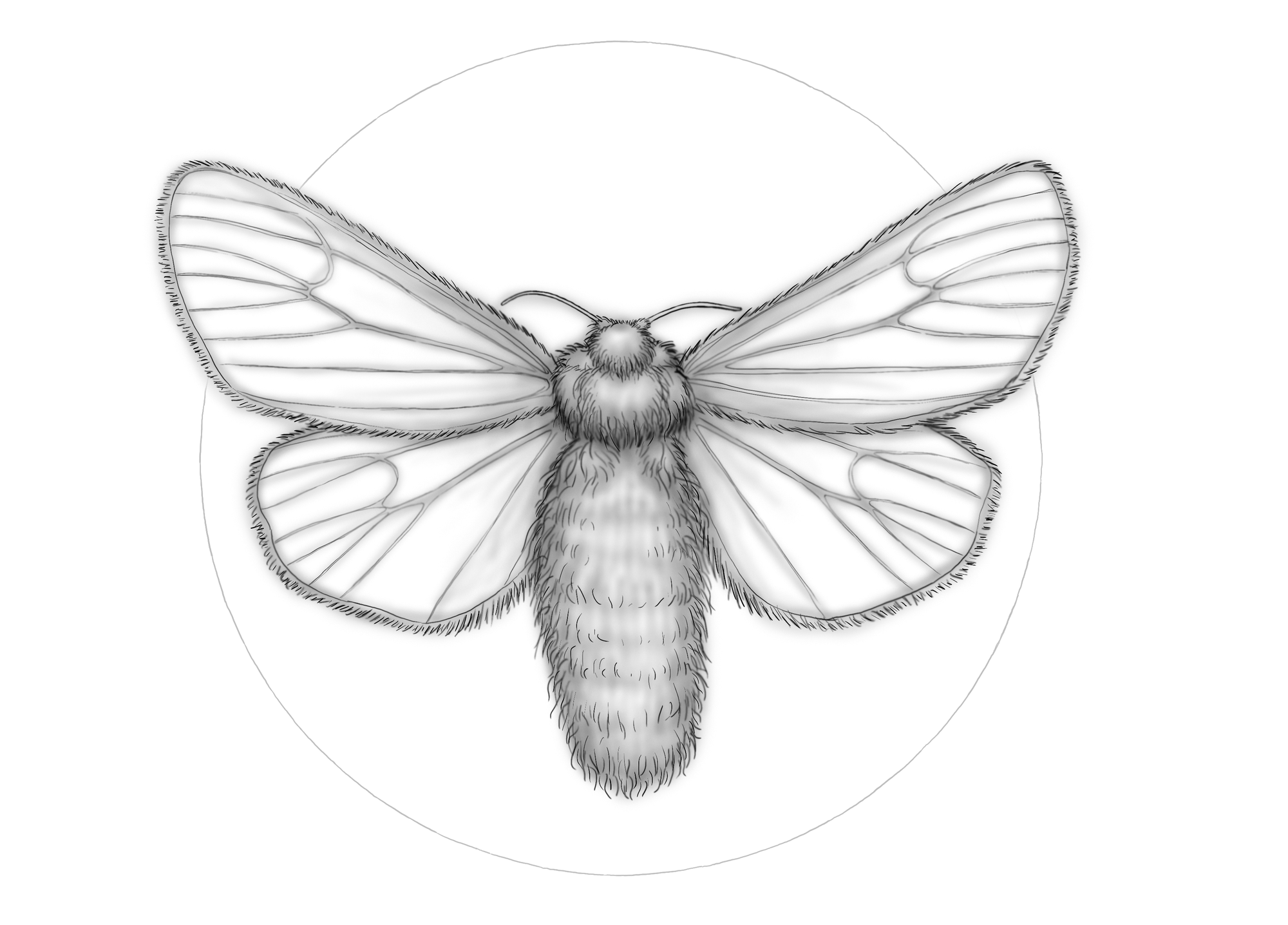
The organizational brilliance of holometaboly is spectacularly exhibited in the difference between the arctic woolly bear caterpillar and the moth that emerges from the pupal cocoon. The winged moth takes flight in order to mate. This just-in-time emergence of wings is advantageous in terms of molting, which is considerably less complicated with a roly-poly wingless body.
Without wings, larvae are also less constrained in burrowing, whether for protection or in the act of feeding. The bodies of holometabolous insects are specialized for each life stage. Prior to cocooning, every physical attribute is attuned to growth. Afterward, the body is optimized for reproduction. Wings that would inhibit the former promote the latter by enhancing dispersal and mate selection.
The partitioning of life stages minimizes competition between mature insects and their offspring. Adults and larvae have different goals and needs. They live in different niches. But an even more remarkable aspect of this life strategy is evolutionary. With holometaboly, the evolution of life stages is largely decoupled, attaining a kind of modularity. Growth and reproduction can both be optimized because each can evolve semi-independently. Consider the aerodynamic efficiency of wings. Efficient wings are light, which makes them delicate. They can evolve to become more fragile over many generations because they don’t have to withstand molting, an evolutionary constraint that would likely favor a structure that is more robust, less flightworthy.
Yet total decoupling would be catastrophic. Life stages could diverge so much that they would no longer mesh: adaptive radiation happening within a single organism until it became a kind of temporal chimera, biologically incompatible with itself from month to month. Metamorphosis would transition into extinction. The persistence of insects is ample evidence that doesn’t happen.
The pupa was once believed to be a soup. The larva was thought to dissolve and the imago to form from the liquid. In fact, much of the insect body remains intact, loosely connecting the stages of life. Cells die in an orderly way and others take their place. The template for the adult already exists when the egg hatches, but in the larva most of the adult body is expressed at a whisper. For instance, future wings are mere pads, subcutaneous and unarticulated. Thus protected, they pose no problem for burrowing or molting. Genitalia can also be found in a premature form if you know where to look. The larva is prepared for the next stage of life but unburdened by it. Readiness for adulthood makes the growth stage more flexible and responsive. In some species, instars can be skipped in times when food abounds. Hormonal regulation of life stages allows the insect to synchronize with the environment. In some insects (though not woolly bears), there’s even a plurality of developmental pathways — technically known as polyphenism — which can be controlled by stimuli ranging from temperature to population size. Depending on conditions experienced at the larval or pupal stage, imagoes can emerge with different physical and behavioral characteristics, suitable to their surroundings. For these species, life inside the cocoon is a choose-your-own-adventure story.
All of this is sensible in terms of development and survival in a variable environment, but presents an evolutionary conundrum that is relevant to organizations as much as insects. Larvae appear to be simpler than imagoes, and therefore seem to be more primitive. It’s tempting to think that the first moths lived their whole lives as caterpillars, adults emerging later in evolutionary time much as they emerge later in a generation. The problem with that assumption is that the template for adulthood has no function at the larval stage. There’s no conceivable way in which wing pads would evolve if the evolution of wings was far in the future. Natural selection cannot make predictions.
In fact, the imago evolved first. The larval stage was added later. (More primitive hemimetabolous insects look like miniature versions of their adult selves from the moment they hatch). According to the most widely accepted theory of metamorphosis, the larva is essentially an embryo on the move. By emerging from the egg early, the embryo is able to feed and grow. Most likely, this adaptation didn’t happen all at once. The complete metamorphosis of the pupa probably took place over multiple stages, corresponding with successive molts. Indeed, some insects today undergo hypermetamorphosis, in which the larval instars differ from one another. (The phenomenon is most common in parasites that devote their first instar to locating a host and subsequent stages to feeding, forgoing mobility.) The larval stage is the gift of metamorphosis, the key to versatility.
It may be tempting to see the Articles of Confederation as the Constitution in larval form, to compare Independence Hall to a cocoon and the Virginia plan to the pupal stage in the metamorphosis of a nation. I suppose this would be an improvement on the looseness with which metamorphosis has been used as a metaphor, but more is revealed by the myriad ways in which the metaphor is inadequate. Most obviously, there is nothing analogous to the evolutionary basis of holometaboly. The Articles of Confederation came into being sui generis. There was not a lineage of one-stage constitutions underlying the two-stage process that constituted this United States. This point may seem pedantic. On the contrary, it’s the point of departure for reconstituting constitutions and constitutionalism on the basis of the internal organization of insects.
The fundamental principle to be learned from bugs is that resilience in a variable environment can be successfully managed by development in stages. Each stage must be regulated differently, and the regulation of those regulations must account for those differences. Insects have evolved to have multiple levels of regulation, regulating everyday life and regulating transition. In contrast, the Constitution replaced the Articles of Confederation through a crisis. The Articles of Confederation, unlike larvae, were not set up for metamorphosis. They were structured for perpetuity. In Independence Hall, all rules had to be suspended as principles of perpetuity collided with harsh reality.
A constitution inspired by insect metamorphosis would be framed on the basis of how nations age, and would anticipate the fundamentally different goals and needs at each stage. Although these are not predictable in their details, certain trends can be extrapolated from history, much as natural selection captures patterns and exploits probabilities. One plausible difference between nascent and mature nations is that the latter will have more assimilation through the movement of people over generations. If a nation is formed from territories that are culturally distinct, then federalism might be beneficial at first but subsequently detrimental. In an early stage, a constitution could mandate a degree of autonomy for states that would be eliminated in a later phase.
Admittedly, this is not perfectly analogous to biology. Insects do not look backward from an imagined future in order to set the initial conditions for its realization. I am not trying to map a perfect metaphor, but rather to extrapolate models that might be useful for bioinspired design. What is important, I believe, is to template the mature form a government might take, and then to provide mechanisms that enact the required transformations. Like programmed cell death, where tissues self-destruct according to a routine that makes their mortality orderly, clauses of a constitution can be framed with future deactivation written into them. Much as those dead cells provide the raw materials for new tissues, the form of which is encoded in the insect’s genes, deactivated clauses can be reformulated according to higher-level rules. As is the case with hypermetamorphosis, this can happen over many stages involving many changes. Although the arctic woolly bear does not undergo hypermetamorphosis, the creature’s survival in harsh conditions provides one of the deepest lessons about transformation. The instars follow a preestablished order, but are contingent in their timing and number. The regulations are themselves regulated by internal conditions and the outside environment. How plump have I become? Is the weather getting hotter? These assessments align the insect’s plans to grow and mate with all the variables of the High Arctic Archipelago. A multiphase constitution must be sensitized in a similar manner. From changes in population to climate extremes, relevant events need to be identified and employed as regulatory triggers.
Ambitious framers can do more with this principle, as have some species of butterfly that vary their wing patterns based on weather conditions during development, displaying markings optimized for their environment. The meta-adaptive benefits of polyphenism could likewise be encoded in a constitution. In theory, there’s no limit to the number of forking paths other than the framers’ collective imagination. (The imagination would be enhanced by including choose-your own-adventure writers and game designers.)
Murmurs of holometabolous constitutionalism can be found in temporary and transitional constitutions. Such constitutions have a long history. Aristotle mentions that ancient Athens enacted one “to be in force in the present crisis”, intended to be replaced with another drawn up “for the future”. In more recent times, countries ranging from Brazil to South Africa have enacted constitutions with interim status, requiring formal ratification after a trial period. (In Brazil, for instance, a presidential system was mandated in 01988 with the stipulation that it be subjected to a referendum five years hence.) In other places, constitutions have been enacted with provisions that had an expiration date. (In Portugal, for example, the 01976 constitution forbade amendments for the first six years in order to stabilize a precarious democracy following a period of military dictatorship.)
The constitutional scholar Sumit Bisarya has compared transitional previsions to catalytic enzymes “whose job it is to initiate a metabolic chain-reaction”. His metaphor suggests an important difference between interim rules and a constitution inspired by metamorphosis. The laudable goal of a transitional constitution (or constitutional provision) is to create initial conditions for future constitutional stability. A temporary constitution essays something similar by slightly different means, giving a society the opportunity to find out whether an unfamiliar system is fitting before committing to it. Comparing them to metabolic enzymes may be too vague; they are catalysts of constitutional embryogenesis. The motivation for making a constitution holometabolous, in contrast, is to account for the whole lifecycle. The holometabolous constitution is equivalent to the genotype that constitutes the insect’s phenotype and reconstitutes it at each stage.
The genotype is a product of an evolutionary process that can be as important for constitutionalism as it is for insect biology. In the two centuries since the Framers met in Philadelphia, many hundreds of constitutions have come and gone. Scholars have examined the population of constitutions both extant and extinct for recurring language — much of which is repeated time and again — and for evolving approaches to perennial problems such as the positive feedback loops that strengthen elites. At least informally, the committees that draft constitutions attempt to copy what has worked historically (such as checks and balances) and to compensate for the failings they observe in constitutions preceding their own (such as life tenure for judges). Even if nations are not related in the way that arctic woolly bears are, this adoption and adaptation of clauses can be enhanced by separately optimizing for each stage. The evolutionary modularity afforded by metamorphosis can enhance the ability of future constitutions to improve upon those past. Metamorphosis increases their evolvability.
Might the enhanced evolvability of constitutions bring new life to Thomas Jefferson’s old idea that constitutions should die? Instead of artificially setting the length of a lifespan in advance, framers could include provisions regulating expiration following a process of reproduction, activated by properties of the political environment. In contrast to woolly bears, the constitutional offspring would not have to be limited to the genomes of two parents, but could pool the genetic material of all constitutions everywhere.
The family resemblances of constitutions today are not sufficiently appreciated for their moderating effect on geopolitical differences. As untenable as world government might be in name, the constitutional population constitutes governance at a global scale, and this form of global governance would be likely to increase if constitutions were to evolve together with expanded capacity to benefit from one another through the modularity of holometabolous evolution.
Complete metamorphosis evolved only once on Earth. Arctic woolly bear moths carry a 320-million-year legacy. Even the framers of the Articles of Confederation cannot have imagined that perpetuity would last so long. The constitution of the arctic woolly bear moth is perpetuated through recurring transformation.
Further Reading
Amar, Akhil Reed, The Words That Made Us: America's Constitutional Conversation, 01760-01840, Basic Books, 02021
Barrio, Isabel C., et. al. “First Records of the Arctic Moth Gynaephora groenlandica (Wocke) South of the Arctic Circle: A New Alpine Subspecies", Arctic, 02013
Belles, Xavier, “The Innovation of the Final Moult and the Origin of Insect Metamorphosis", Philosophical Transactions B, 02019
Belles, Xavier, Insect Metamorphosis: From Natural History to Regulation of Development and Evolution, Academic Press, 02020
Belles, Xavier, “Investigating the Origin of Insect Metamorphosis”, eLife, 02023
Bisarya, Sumit, “Performance of Constitutions: Transitional Provisions”, Assessing Constitutional Performance, Cambridge University Press, 02016
Danks, Hugh V., et. al., “Insect Cold-Hardiness: Insights from the Arctic”, Arctic, 01994
Danks, Hugh V., “Seasonal Adaptations in Arctic Insects”, Integrative and Comparative Biology, 02004
Daum, Courtenay W., “We the People and America’s Constitutional Crisis”, New Political Science, 02023 Elkins, Zachary, et. al., The Endurance of National Constitutions, Cambridge University Press, 02012
Ginsberg, Tom, et. al. “Assessing constitutional performance”, Assessing Constitutional Performance, Cambridge University Press, 02016
Ginsberg, Tom, et. al., “Does the Process of Constitution-Making Matter?”, The Annual Review of Law and Social Science, 02009
Grimaldi, David A., The Complete Insect: Anatomy, Physiology, Evolution, and Ecology, Princeton University Press, 02023
Grover, Leena, “Out of the Shadows: Illuminating the Distinctiveness and Exceptional Use of Interim Constitutions”, International Journal of Constitutional Law, 02024
Kukol, Olga., “Adaptations to Cold in a Freeze-Tolerant Arctic Insect”, Insects at Low Temperature, 01991
Kukal, Olga, et. al., “Temperature and Food Quality Influences Feeding Behavior, Assimilation Efficiency and Growth Rate of Arctic Woolly-Bear Caterpillars", Oecologia, 01989
Kukal, Olga, “Winter Mortality and the Function of Larval Hibernacula During the 14-Year Life Cycle of an Arctic Moth, Gynaephora groenlandica”, Canadian Journal of Zoology, 01995
Levinson, Sanford, et. al., “Constitutional Crisis”, University of Pennsylvania Law Review, 02009
Lewis, John David, “Constitution and Fundamental Law: The Lesson of Classical Athens”, What Should Constitutions Do?, Cambridge University Press, 02012
Manthey, Christin, et. al., “Rapid Growth and the Evolution of Complete Metamorphosis in Insects”, Proceedings of the National Academy of Sciences, 02024
Morais-Storz, Marta, et. al., "Innovation and Metamorphosis Towards Strategic Resilience", International Journal of Entrepreneurial Behavior & Research, 02018
Morewood, W. Dean, et. al., “Revision of the Life History of the High Arctic Moth Gynaephora groenlandica (Wocke) (Lepidoptera: Lymantriidae)”, Canadian Journal of Zoology, 01998
Niemi, William L., “Should Progressives Fight or Welcome the Republican Effort to Call a Constitutional Convention?”, New Political Science, 02023
Rolff, Jens, et. al., “Complete Metamorphosis of Insects”, Philosophical Transactions B, 02019
Sehnal, Frantisek, “Effects of Cold on Morphogenesis”, Insects at Low Temperature, 01991
Sømme, Lauritz, et. al., “Adaptations to Alpine and Polar Environments in Insects and Other Terrestrial Arthropods”, Insects at Low Temperature, 01991
Starbuck, William H., “Organizational Metamorphosis”, Promising Research Directions, Academy of Management, 01968
Starbuck, William H., “Tadpoles into Armageddon and Chrysler into Butterflies", Social Science Research, 01973
Truman, James W., “The Evolution of Insect Metamorphosis”, Current Biology, 02019
Truman, James W., et. al., “The Evolution of Insect Metamorphosis: A Developmental and Endocrine View”, Philosophical Transactions B, 02019
Varol, Ozan O., “Temporary Constitutions”, California Law Review, 02014
Versteeg, Mila, et. al., “Constitutions Unentrenched: Toward an Alternative Theory of Constitutional Design”, American Political Science Review, 02016
Yoon, Kane J., et. al., “One Genome, Multiple Phenotypes: Decoding the Evolution and Mechanisms of Environmentally Induced Developmental Plasticity in Insects”, Biochemical Society Transactions, 02023