
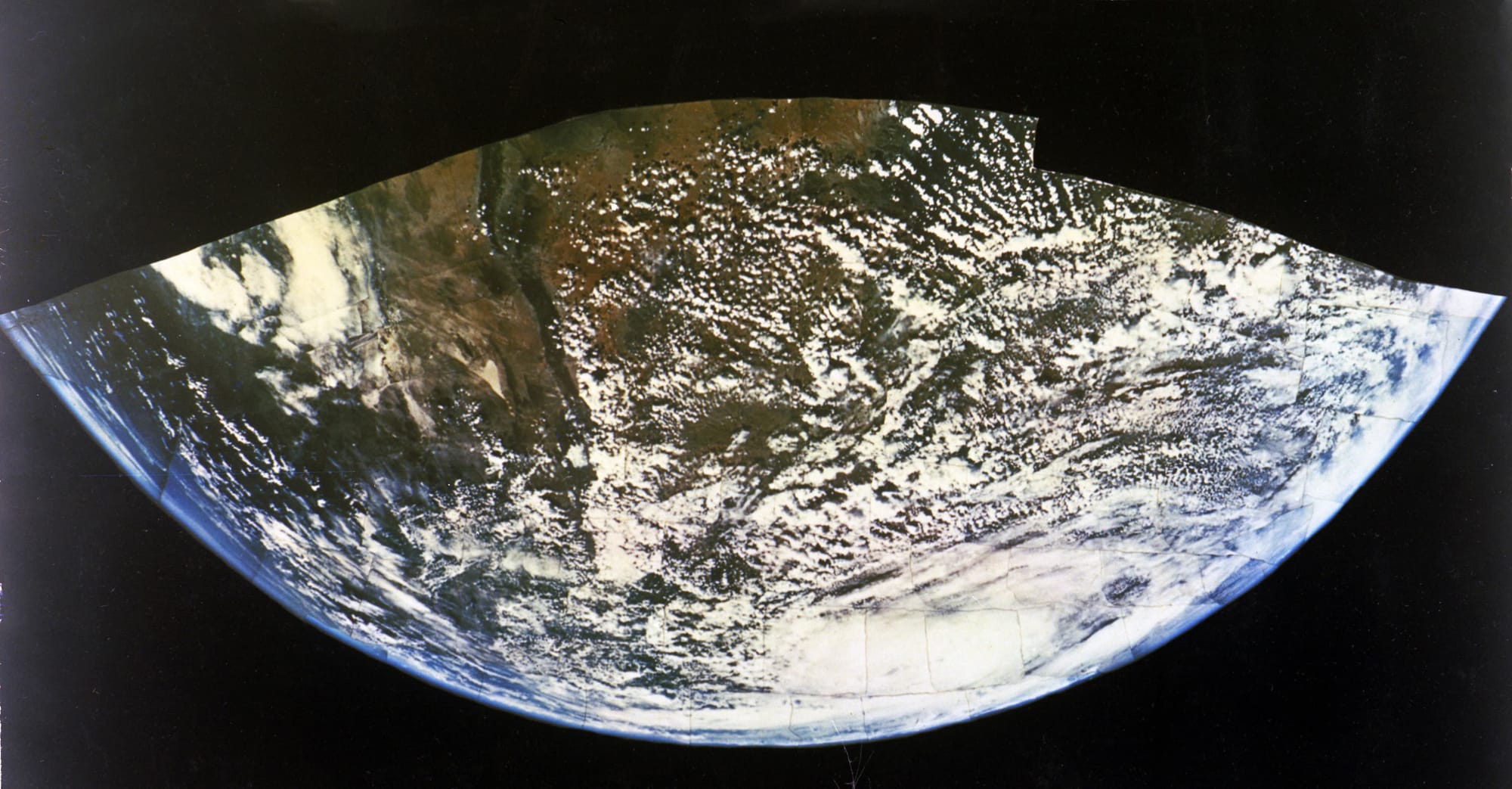
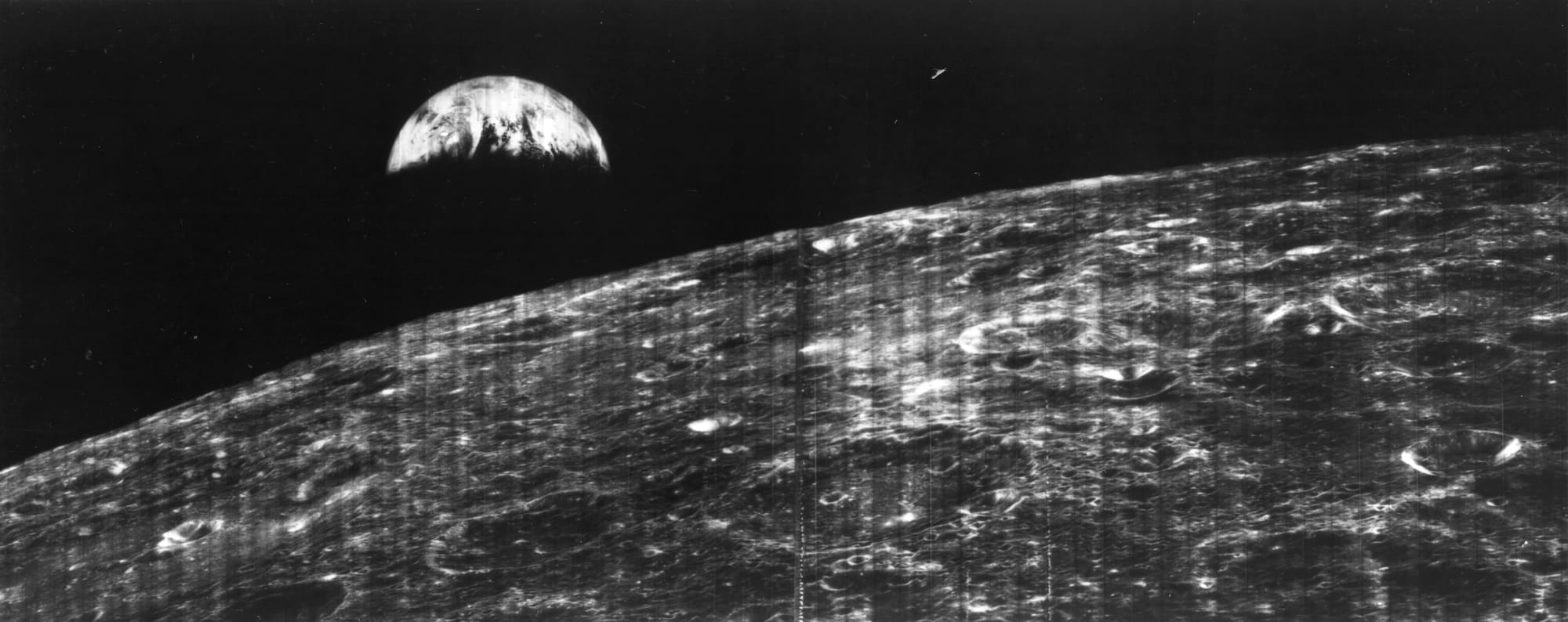
In 01966, Long Now cofounder Stewart Brand visited college campuses across the United States selling buttons that asked: “Why haven’t we seen a photograph of the whole Earth yet?” When a young person at Columbia asked what good such a picture would do, Brand replied: “Why do you look in a mirror?”
We often narrate the arrival of those iconic images as heralding our awareness of Earth — its beauty, its fragility. But they heralded something more: Earth’s awareness of itself.
A planet that has achieved self-awareness might be incredibly rare in this galaxy, let alone the universe. Building a long now is how we preserve it.
We are living through a moment in which a long now is no longer a cultural aspiration but a structural necessity for continuity, for any meaningful prospect of flourishing, and for avoiding pathways of runaway collapse.
A long now doesn’t mean a vague commitment to the future. It means something practical and demanding: the capacity to hold continuity across multi-generational horizons — to sustain learning, legitimacy, investment, care, coordination, and institutional renewal — even as conditions become more volatile, less predictable, and more tightly coupled. A long now is civilization’s ability to remain future-bearing under stress.
One of the clearest pathways to constructing a long now is rooted in a single strategic focus: the preservation and expansion of civilizational optionality.
Optionality in this context is not “the options currently available.” It is the degrees of freedom available to civilization — the maneuver space we retain to respond not only to uncertainties we can name, but to deep unknowns and cascading failures that compound faster than institutions can adapt.
A civilization with high optionality can absorb disturbance without collapsing into zero-sum dynamics. It can recompose itself without becoming brittle. It can keep multiple viable pathways open long enough to learn. A civilization with low optionality loses this maneuver space. It becomes trapped in narrowing corridors of coercion, scarcity, and conflict, where each shock closes more futures.
We are entering a phase in which the rate of optionality destruction is accelerating. The dynamics we face are interacting and mutually amplifying: climate breakdown, soil contraction, hydrological disruption, fertility stresses, supply-chain fragility, political polarization, and legitimacy erosion. When these stresses hit foundational goods — food, water, energy, shelter, health, insurability — they produce whiplash that forces societies into defensive postures that shrink their degrees of freedom.
Inequality accelerates because vulnerability is not evenly distributed. Social contracts fracture. Politics becomes more reactive, more securitized, more extractive. Conflict becomes not an exception but an attractor. When that conflict dynamic meets asymmetric tools — information weapons, bio-capabilities, infrastructure disruption — the downside is runaway cascades that close futures at speed, including pathways toward mutually assured destruction.
The urgency is structural. We are approaching a regime where the system can lose the capacity to self-correct, because the space for adaptation is being eaten away by compounding volatility and accelerating distrust.
Optionality is not a philosophical luxury. It is the precondition for any serious future. It is what makes it possible to hold a long now at all. If we do not preserve and expand optionality, then the future becomes a narrowing tunnel where each crisis reduces our ability to meet the next.
What follows is a structured argument in ten logics. Each is meant to be load-bearing: an attempt to name the operating dynamics that make optionality the organizing object for a long now — and to specify what that implies for institutions, capital allocation, and the design of capacity under constraint.

Logic One: Optionality versus Longtermism
Optionality and longtermism are both forms of long-term thinking. The core distinction between them is not temporal, but ontological.
Optionality takes as its object all of humanity — not merely its persistence, but its capacity to continue unfolding across multiple possible futures. Longtermism, as the term has developed in effective altruist and existential risk discourse, tends to take as its object the continuity of civilization, which may be achieved with a far narrower constituent body and drastically reduced future possibility. Continuity can be achieved without plural futures.
Continuity is a subset condition. Optionality is a field condition.
It is entirely possible to preserve a recognizable civilization — institutions, technologies, elites, archives — while collapsing the optionality of the species itself. Humanity continues, but only along a thin, brittle trajectory, stripped of alternative developmental pathways, cultural richness, ecological plurality, and evolutionary freedom.
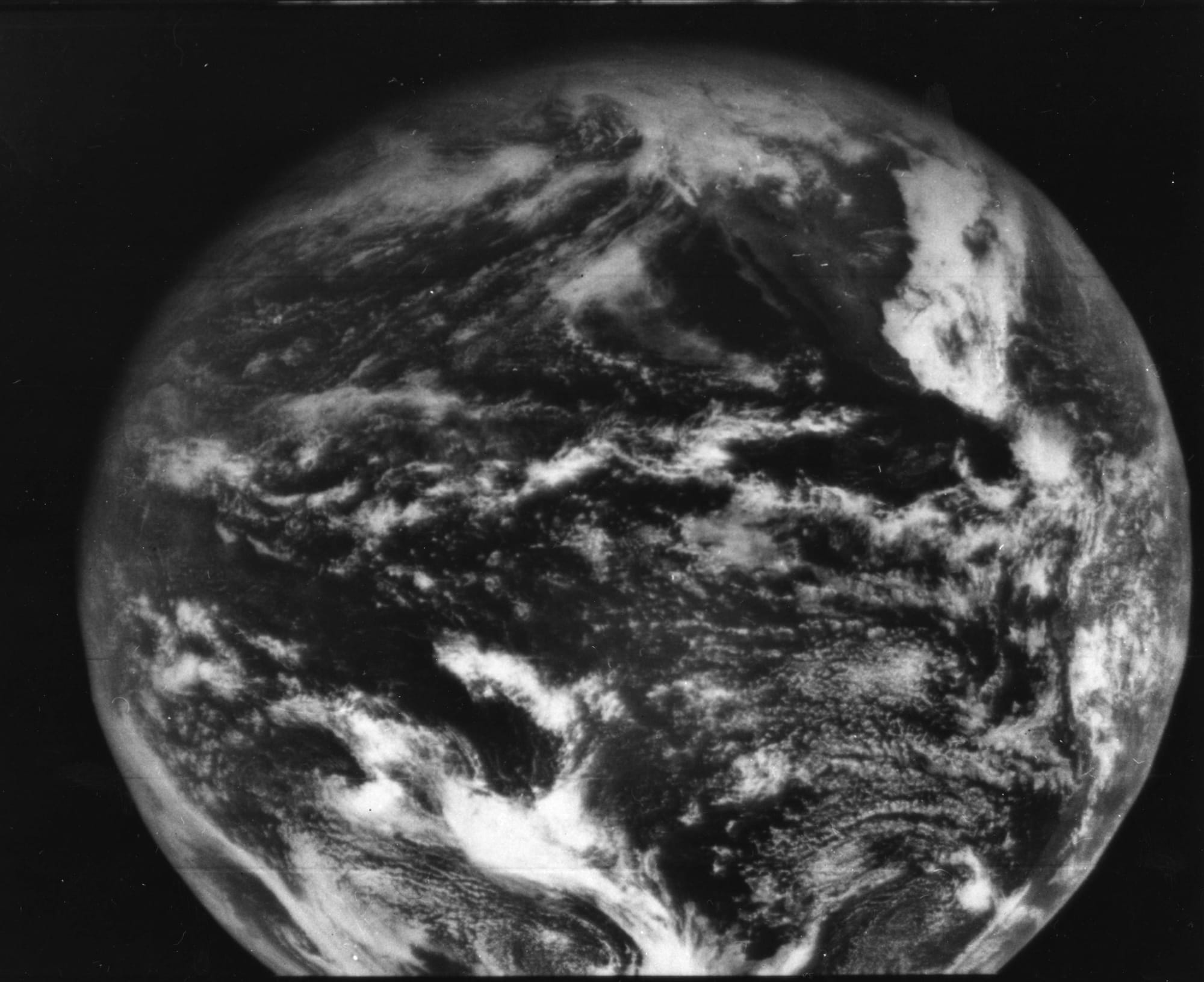
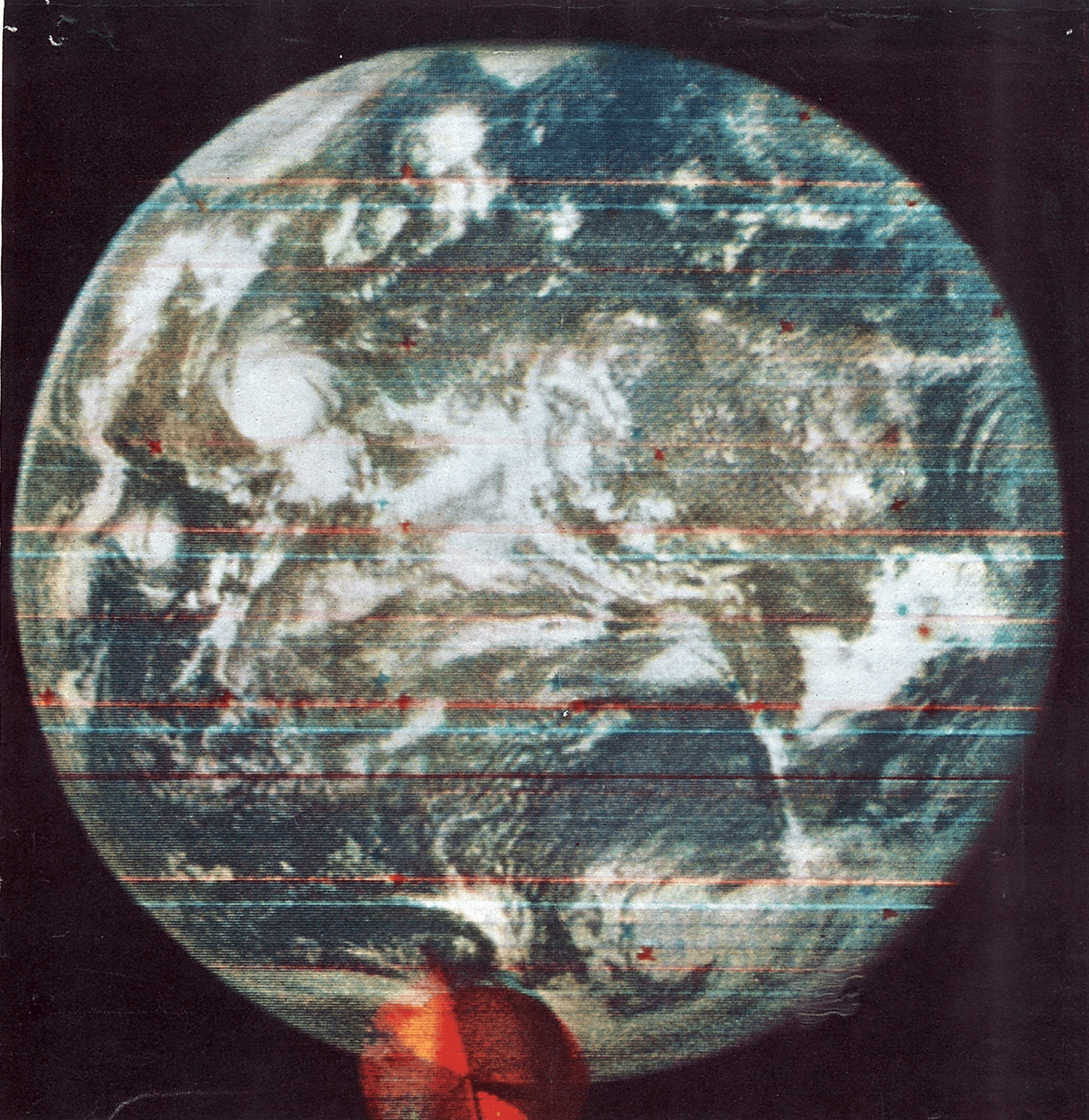
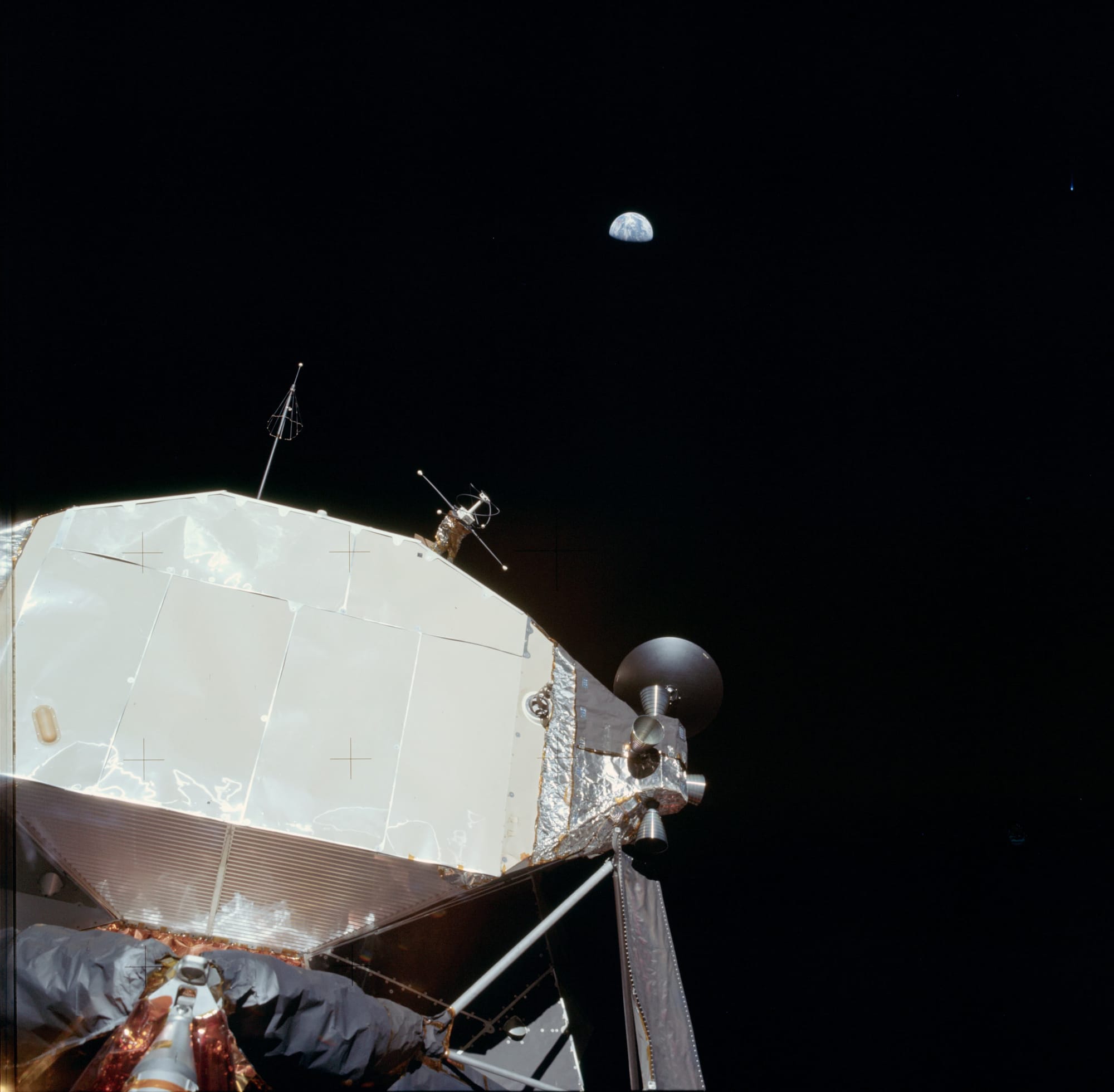
Civilizational optionality is rooted in a cosmological narrative — one articulated most clearly by James Lovelock. Earth has accumulated vast stores of solar energy over geological time as enabling conditions for the emergence of higher-order intelligence. Through humans, machines, biological systems, and their entanglements, this stored energy has been mobilized into a planetary-scale cognitive system: distributed sensing, modeling, and acting capacities across biological, technological, and institutional substrates. The first photographs of the whole Earth were images of that system perceiving itself.
From this perspective, the strategic objective is not simply survival, nor stability, but the preservation and expansion of optionality: the capacity of this entangled intelligence to continue exploring, learning, recombining, and becoming otherwise.
The reduction of optionality is catastrophic foreclosure: the elimination of vast, uncountable future possibles. These losses manifest as absences — paths never taken, intelligences never formed, civilizational forms never realized. Because the space of possible futures is not enumerable, the downside risk of optionality collapse approaches an effectively infinite downside: we cannot know what we have foreclosed.
This makes optionality a first-order strategic variable, not a moral preference. Its loss constitutes an infinite downside risk that cannot be compensated by efficiency, stability, or continuity alone.
Logic Two: Optionality Collapse Through Externality Recoupling
The developmental engine that expanded civilizational optionality has also produced a growing tail of externalities — carbon loading, plastics and endocrine disruption, fertility decline, biodiversity loss, soil and hydrological exhaustion, and climate-mediated instability.
For a long time, these externalities were treated as decoupled. That assumption is breaking.
What we are now entering is a phase of forced recoupling: the externalities are no longer “outside” the operating model. They are re-entering the system as active constraints and destabilizing feedbacks. Carbon becomes heat stress and food volatility. Plastics become endocrine risk. Biodiversity loss becomes disease dynamics. Hydrological disruption becomes energy instability.
This generates systemic volatility because multiple foundational layers — food, water, energy, public health, supply chains, insurance, and political legitimacy — are being knocked out of stable operating bands simultaneously, in mutually amplifying ways.
Crucially: this is not creative destruction. It is degenerative volatility — volatility that degrades the baseline conditions required for learning, investment, coordination, and capability-building. The volatility is not opening option-space; it is collapsing it.
So Logic Two is a reversal: the externality tail of the optionality-expansion regime is now actively threatening the optionality accumulated to date.

Logic Three: Whiplash Scarcity, Contract Failure, and the Conflict Cascade
Biophysical volatility is now expressing as whiplash in foundational goods — food, water, energy, shelter, and insurability.
As climate breakdown intensifies, the system becomes less legible and less stable. The result is not a steady-state “new normal” but repeated supply shocks and price spikes — followed by partial recoveries that do not restore predictability. This is whiplash.
Whiplash dynamics are politically toxic because foundational goods are not discretionary. When they spike, they function as an involuntary tax landing hardest on the poor and precarious. Over time, this accumulates into runaway inequality — not only as an income gap but as a widening gap in exposure to volatility.
Inequality at this level destabilizes the social contract. It corrodes legitimacy, polarizes attention ecosystems, and increases incentives for scapegoating and internal repression. That raises the probability of internal conflict and makes states more brittle and reactive.
At the interstate level, the same whiplash conditions increase the strategic salience of foundational goods. Food, water, energy, and supply-chain choke points become weaponizable vulnerabilities. States treat stability of foundational access as a security problem — shifting from market coordination toward security competition.
This is where the cascade steepens: these stressors now converge with a radically changed conflict substrate — asymmetric warfare capacity and low-barrier escalation tools. Information weapons that destabilize coherence; bio-capabilities that widen catastrophic risk; precision disruption of infrastructures; weaponization of vulnerability in foundational goods.
In this combined regime, the world enters a fork-risk zone: a condition where multiple interacting cascades (biophysical whiplash → inequality → contract fracture → conflict incentives) create self-reinforcing dynamics that can tip into runaway conflictual pathways. Because the escalation substrate is asymmetric, distributed, and increasingly automatable, the downside is a pathway toward mutually assured destruction — not via a single deliberate act, but via a chain of accelerating reactions, misperceptions, and opportunistic escalations.
The urgency is structural: the system is entering a phase where conflict becomes an attractor unless optionality is actively defended by redesigning the conditions of foundational stability, legitimacy, and cooperative security.
Logic Four: The Regime Shift From “Solving Problems” to “Defending Maneuver Space”
In a relatively stable world, strategy can be framed as problem-solving: define the issue, optimize a solution, scale it, measure impact. But in a recoupled world, where cascading failures propagate faster than institutions can adapt, strategy must be reframed as the defense and expansion of maneuver space.
The object becomes: preserving the conditions under which society remains governable, investable, and capable of learning. This is what optionality names: not preferred outcomes, but the capacity to keep outcomes possible.
This reframing changes how we evaluate interventions. We ask: does this preserve or expand degrees of freedom under stress? Does it keep the system out of zero-sum traps; stabilize foundational goods; improve legitimacy; reduce cascade probability; open adjacent pathways for future recombination?
Logic Four sets up the allocative turn: if the object is maneuver space, then investment becomes one of the primary instruments through which maneuver space is defended.
Logic Five: Allocation as Optionality Preservation and Redefinition
In this context, capital allocation becomes inseparable from optionality.
Not as a moral gesture, but as a core investment imperative: the ability to preserve and expand civilizational optionality is now a prerequisite for any non-delusional theory of long-run value. When optionality collapses, returns collapse with it.
The strategic objective is to allocate in ways that keep society out of net zero-sum dynamics — the regime where scarcity, volatility, and distrust force actors into extractive competition, accelerating inequality, conflict, and systemic fragility. Zero-sum equilibria are optionality-destroying attractors that self-reinforce through defensive politics, securitized supply chains, and escalating coercion.
So the investment task is not simply to “fund solutions.” It is to fund the conditions of a self-preserving society: the infrastructures, institutions, and coordination capacities that prevent cascades from tipping into runaway conflict and civilizational contraction.
But this also forces a redefinition of optionality itself. In a recoupled, volatile world, optionality is the maintained capacity of a society to stay within viable biophysical operating bands; stabilize foundational goods against whiplash; sustain legitimacy under stress; prevent inequality from becoming structurally explosive; and hold cooperative security without slipping into permanent warfare dynamics.
Allocation to optionality is civilizational risk management at the highest level: investing so that we do not fall into the zero-sum collapse that destroys the substrate of future possibility.
Logic Six: Anti-Fragile Optionality and the Expansion Pathway
Allocation cannot be framed as “preserving what we have.” That is defensive and structurally insufficient. The requirement is to allocate toward anti-fragile optionality: pathways that increase future possibility-space by metabolizing volatility, not merely enduring it.
Anti-fragile optionality means setting society onto trajectories where each intervention (1) stabilizes or repairs a foundational system under stress, and (2) unlocks adjacent technological, economic, and institutional landscapes — creating new developmental degrees of freedom. This is not resilience as protection. It is generativity under constraint.
A terra preta–style worldview provides a canonical example. The core move is deliberate construction of a higher-capacity substrate — a soil regime more resilient to drought, heat, and nutrient volatility that increases carbon retention and fertility over time.
But the anti-fragile frame is that this becomes optionality-expanding when treated as the seed of a larger cascade. Once soil becomes a designed, measurable substrate, it creates a basis for new sensing regimes. Those pull in micro-autonomous machines — robotics, distributed monitoring, precision composting, adaptive planting. That machine ecology enables multi-species open gardening at scale — a distributed, biodiversity-positive production model in which soil variation, succession, and species interdependence are treated as productive dynamics rather than noise to be eliminated. Such systems were previously too complex to coordinate economically; machine ecology provides the fine-grained monitoring and cost attribution that makes polycultural landscapes financeable, insurable, and investable for the first time.
Once operational, this generates new institutional and market forms: stewardship registries, outcome-verifiable soil uplift, distributed maintenance markets, governance architectures for long-duration commons performance.
Crucially, this cascade forces finance to evolve: soil valuation that treats fertility as productive capacity; capital stacks funding distributed interventions; instruments pricing reduced volatility as systemic dividend; contractual forms holding multi-agent contribution over long timeframes.
The proposal is: allocation should target expansion cascades — interventions that repair the base layer and create adjacent option-space. Not “save the system,” but re-route it into trajectories where each stabilization act becomes a generator of new possibility.

Logic Seven: Typological Sites of Optionality Risk and Optionality Expansion
If optionality is the strategic object, then the allocation problem becomes spatial and typological: where is optionality most at risk of runaway collapse — and where can interventions generate expansion cascades?
We are looking for critical sites where coupled biophysical and social dynamics are close to tipping, such that failure produces disproportionate loss of optionality, and success creates disproportionate new option-space. This yields a typology of “optionality theatres”:
1. Cryosphere–Hydrosphere Governance Theatres
Example: the Himalayas. The risk is destabilization of hydrological infrastructure for billions. Once water reliability collapses, effects propagate through food, energy, cities, and interstate security — amplifying conflict probabilities across regions including multiple nuclear powers. The intervention focus: stabilizing water systems as security infrastructure.
2. Atmospheric–Hydrological Coordination Theatres
Example: the Arabian Peninsula. The frontier is building transnational organizational forms for atmospheric and hydrological governance capable of coordinating allocation and equitable distribution to reduce conflict incentives. Treat water and heat governance as cooperative security, not zero-sum contest.
3. Soil–Nutrient Substrate Theatres
Example: arable land systems under net soil loss. Soil is the substrate of food, ecological stability, and rural viability. The expansion pathway is terra preta futures — instrumentation, micro-autonomous machines, distributed stewardship regimes upgrading soil as designed substrate. This creates new governance frameworks, valuation regimes for fertility, and financing mechanisms for regeneration.
4. Urban Heat and Social Contract Theatres
Example: cooling a city by approximately 7.5°C as system intervention. Heat multiplies violence, transformer failure, productivity loss, health shocks, and inequality — fracturing legitimacy. The object is civil order under thermal stress: building capacity to keep a city governable, liveable, and equitable under extreme heat. Success unlocks new infrastructures and finance stacks around avoided volatility.
5. Planetary Boundary Tipping Theatres
Example: Antarctica. If Antarctic systems tip irreversibly, the consequence is sea level rise at civilizational scale — rewriting coastlines, destroying infrastructure, collapsing multi-trillion balance sheets. Planetary-scale risk whose failure removes entire future civilizational trajectories.
6. Fertility as a Coupled-System Theatre
Fertility is a coupled socio-economic system: endocrine disruption, economic precarity, housing, care infrastructures, meaning, time, and social trust. Without rebuilding enabling conditions, demographic contraction interacts with labour markets, welfare states, intergenerational legitimacy, and geopolitical stability. The intervention is rebuilding enabling conditions for family formation as a foundation of optionality.
7. The Theory-of-Value of Being Human Theatre
The valuation regime itself. If the only value theory we can capitalize is machine-adjacent productivity, we will systemically underinvest in humans: care, capability, learning, consciousness, civic agency, legitimacy, collective intelligence. A critical site of optionality is prototyping a new capitalization logic treating societal decision-making capacity and human capability formation as investable, compounding assets.
Across all these theatres, the common pattern is: runaway downside (if the system tips, optionality collapses nonlinearly); recoupling surface area (failure propagates across food–water–energy–health–legitimacy–security); and expansion cascade potential (successful intervention creates new substrates unlocking adjacent technological, institutional, and economic landscapes).

Logic Eight: Capacity–Need Misalignment and the Search for Diffusible Breakpoints
A further constraint appears: need and allocative capacity do not coincide.
Even where the most critical typologies of optionality collapse are visible — glaciers, heat, soil, hydrology, fertility, legitimacy — the places most exposed are often not where effective prevention or optionality expansion can be financed, governed, and executed at speed and scale.
This mismatch has three structural causes. First, the need is not systemically recognized — it may be locally felt but not framed to build a durable political constituency. Second, many sites lack institutional thickness — they lack robust public agencies, legal rails, procurement capacity, or civic intermediaries to absorb complex capital stacks and coordinate multi-actor delivery. Third, many sites lack institutional renewal capacity and talent capacity — institutions may be brittle, exhausted, under-skilled, or politically constrained.
So the allocative problem shifts. We cannot only ask: where is the risk most extreme? We must also ask: where can we build the breakpoints that redirect the risk trajectory — and then diffuse those breakpoints outward into the highest-risk theatres?
This produces a second kind of site selection: diffusible breakpoints. These are locations where the risk is legible enough to organize around; the political constituency can be built; the institutional substrate is thick enough to execute; the talent base can be mobilized; and the resulting solution-forms can be made systematically diffusible — replicable, modular, and expandable across geographies.
We search for prototype theatres where we can build working forms of transnational hydrological governance; soil regeneration as designed substrate; deep urban cooling infrastructures; new valuation frameworks for foundational stability and human capability; legitimacy-bearing coordination systems holding long-duration commitments.
These prototypes are not “pilot projects.” They are institutional and economic primitives — new units of organization, verification, and finance that can be lifted and recombined elsewhere.
Logic Eight is the bridge between diagnosis and allocation: allocation must target not only the frontlines of risk, but the places where we can construct durable, expandable response forms — breakpoints that can be diffused into the most dangerous theatres once the form is proven, legitimized, and investable.
Logic Nine: The Exstitutional Wrapper — Designing the Allocation Substrate Itself
At this point the allocation problem clarifies into its deepest layer.
Across all these typologies, the fundamental challenge is not a lack of projects, technologies, or capital. It is the absence of an “exstitutional wrapper”: a coordinating architecture built outside and beyond existing institutional forms, designed to hold what no single institution currently can. Such an architecture is capable of orchestrating liabilities, beneficiaries, and inputs of many kinds around a shared civilizational goal space without relying on a fully pre-constituted political mandate.
What must be constructed is an architecture that can hold plural forms of value and risk; long time horizons under volatility; distributed agency across public, private, civic, and technological actors; and outcomes that only emerge systemically rather than transactionally.
Crucially, this wrapper must itself be anti-fragile: capable of generating derivative capacities — technological, institutional, economic — in the course of pursuing the primary goal, rather than exhausting itself in delivery.
To do this requires several tightly coupled design moves.
First, the construction of deep attractors — organizing prophecies: coherent future states that crystallize desire, align attention, and make coordination legible. These attractors define what is being protected or expanded (optionality), why it matters, and what success looks like at civilizational scale — before the politics are fully resolved.
Second, building the engine and political economy around those attractors — creating mechanisms by which risks, liabilities, and responsibilities can be pulled into a shared frame rather than remaining externalized. Carbon, heat, soil loss, water volatility, fertility collapse: these must become contractible realities, not background conditions.
Third, contracting infrastructure that can hold complexity: new contractual forms, new verification regimes, new ways of allocating accountability across actors not in simple buyer–seller relationships. This allows liabilities to be pooled, upside to be shared, and long-duration commitments to be made credible.
Fourth, orchestrating innovation across multiple actor classes: not just startups, but public-sector capability, civic infrastructures, scientific institutions, machine systems, and place-based entrepreneurship — accelerated toward shared outcome goals rather than isolated outputs.
Fifth, an investment infrastructure capable of pricing more than direct returns. Returns are understood and allocated across multiple dimensions: avoided volatility, preserved option-space, reduced conflict probability, improved legitimacy, enhanced decision-making capacity, and long-term system stability. These are not “externalities”; they are the core value being produced.
Underlying all of this, a legitimacy wrapper. Citizen awareness, citizen science, shared goal-agreement frameworks, and participatory sense-making provide the social license and epistemic grounding needed for long-horizon action.
This is the real allocation target: not individual solutions, but the construction of the wrapper that makes solution-space scalable. The wager is that once this exstitutional architecture exists — once the attractor, engine, contracts, orchestration, investment logic, and legitimacy are aligned — it will pull technological and product innovation to scale.
Allocation at this stage is about designing the conditions under which winners can emerge without destroying the future they depend on.

Logic Ten: Optionality as the First-Class Asset and Continuous Re-Authoring
At this stage, the logic resolves into a clear allocative claim.
What the portfolio of allocations is doing is allocating to preserve civilizational optionality and to construct anti-fragile pathways for its expansion. In a world where wealth is systemically entangled with the continuity of civilization itself, optionality becomes a foundational asset class: not one among many, but the first-class asset. Without allocation to optionality, wealth becomes terminally exposed to collapse as systems spiral toward zero-sum dynamics and mutually assured destruction.
From this perspective, optionality allocation is balance-sheet preservation at civilizational scale.
Optionality is allocatable because it provides a continuity framework: it stabilizes the coupled conditions — biophysical, social, institutional, cognitive — within which any form of wealth can retain meaning and durability. At the same time, it provides an expansion framework, opening new pathways of value creation that remain viable under planetary constraint.
In this logic: optionality is the object; exstitutional wrappers are the delivery mechanism; portfolios of coordinated allocations are the operating form.
These portfolios are constructed to increase degrees of freedom across coupled systems simultaneously — water, soil, climate, cities, fertility, legitimacy, human capability — thereby increasing total adaptive capacity rather than optimizing isolated returns.
This reframes capital ranking and risk assessment. Capital is ranked by optionality delta: the extent to which an allocation expands future possibility-space, stabilizes foundational substrates, and reduces the probability of irreversible collapse. Downside risk is measured as optionality foreclosure: the speed at which pathways close; the irreversibility of those closures; and the likelihood that closures cascade into runaway, system-level failure.
This creates a decision calculus, not a philosophy. Investment committees are allocating across a portfolio of civilizational risk and optionality dynamics, balancing preservation versus expansion, stabilization versus generativity, local interventions versus diffusible breakpoints.
But this is where the final condition must be stated with full seriousness: if the system succeeds, it becomes powerful. And any system that coordinates capital, legitimacy, innovation, and long-horizon commitments at scale risks becoming an attractor that mistakes its own map for the territory — and thereby forecloses futures in the name of protecting them.
So Logic Ten adds the non-negotiable closure condition: optionality cannot be frozen, finalized, or fully specified in advance — including by the very architectures designed to preserve it. If optionality is the first-class asset, then the definition, prioritization, and valuation of optionality must itself remain revisable.
Any exstitutional wrapper that endures must be designed as a continuous re-authoring system, not a terminal authority. This means: the object of protection (optionality) is periodically re-questioned; the portfolio thesis is treated as a hypothesis, not a truth; attractors are stress-tested against emerging realities; exit, mutation, and dissolution remain live options for the exstitution itself.
In practical terms, this requires: reflexive governance loops surfacing weak signals, dissent, and counter-futures; epistemic plurality to prevent monoculture in decision-making; reversibility discipline (avoid irreversible commitments unless collapse-avoidance strictly requires them); and succession and sunset logics recognizing when a form has outlived its usefulness.
This makes legitimacy dynamic rather than static. The exstitution claims legitimacy because it maintains the capacity to change its mind in response to reality — while still holding long-duration commitments.
So the system closes: the long now requires continuity under volatility. Continuity requires preserved degrees of freedom. Optionality is threatened by recoupling externalities, whiplash scarcity, contract fracture, and conflict cascades. The response is allocation: not to discrete “solutions,” but to anti-fragile expansion cascades in critical theatres of risk. Because need and capacity misalign, we must build diffusible breakpoints. To do this at scale requires exstitutional wrappers: attractors, contracting, orchestration, investment logic, and legitimacy. Optionality becomes the first-class asset — the condition of returns remaining possible at all. And to prevent the solution from becoming the next foreclosure engine, the whole apparatus must remain revisable: structured humility, institutionalized doubt, continuous re-authoring.
Optionality is preserved not by certainty, but by disciplined revisability.
That, finally, is a long now: not an extended timeline, but a maintained capability — civilization remaining future-bearing under stress, by defending and expanding the maneuver space through which futures can continue to be generated.